Prop Trading Guides
How prop firms, challenges and funded accounts work, written in plain English. Each guide explains the general model first, then shows where the published Yo Pips rules differ, so you can compare before you pay.
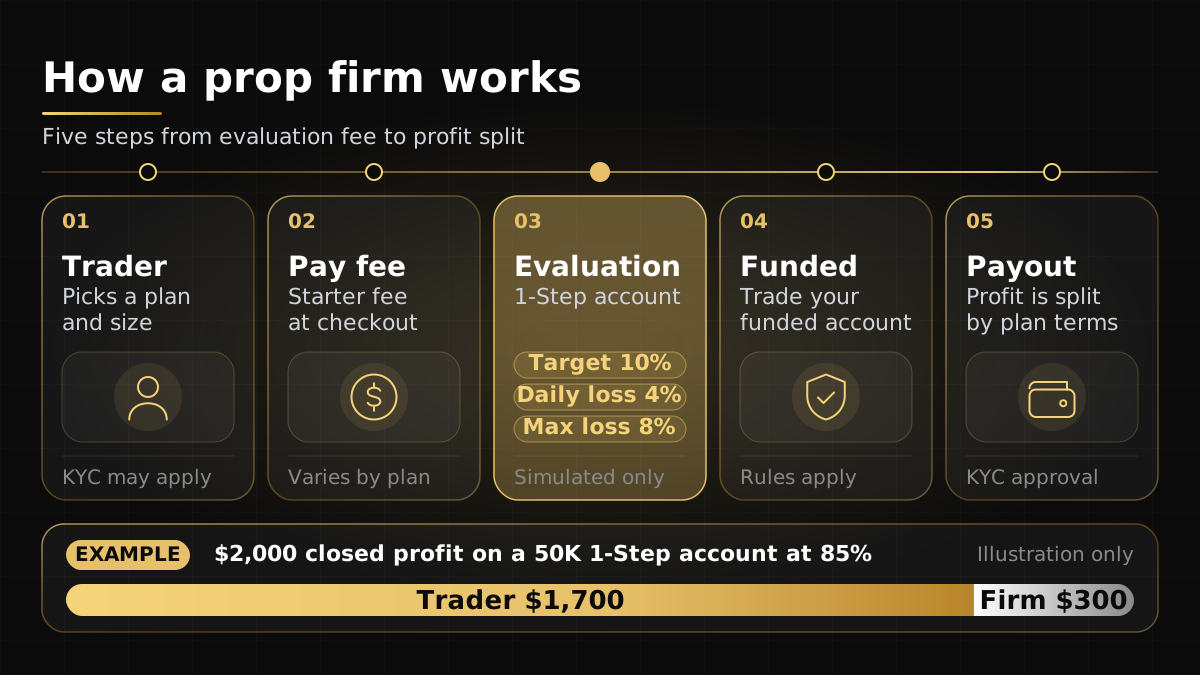
What Is a Prop Firm? How Prop Trading Firms Work
How prop trading firms work, how they earn money and what traders agree to.
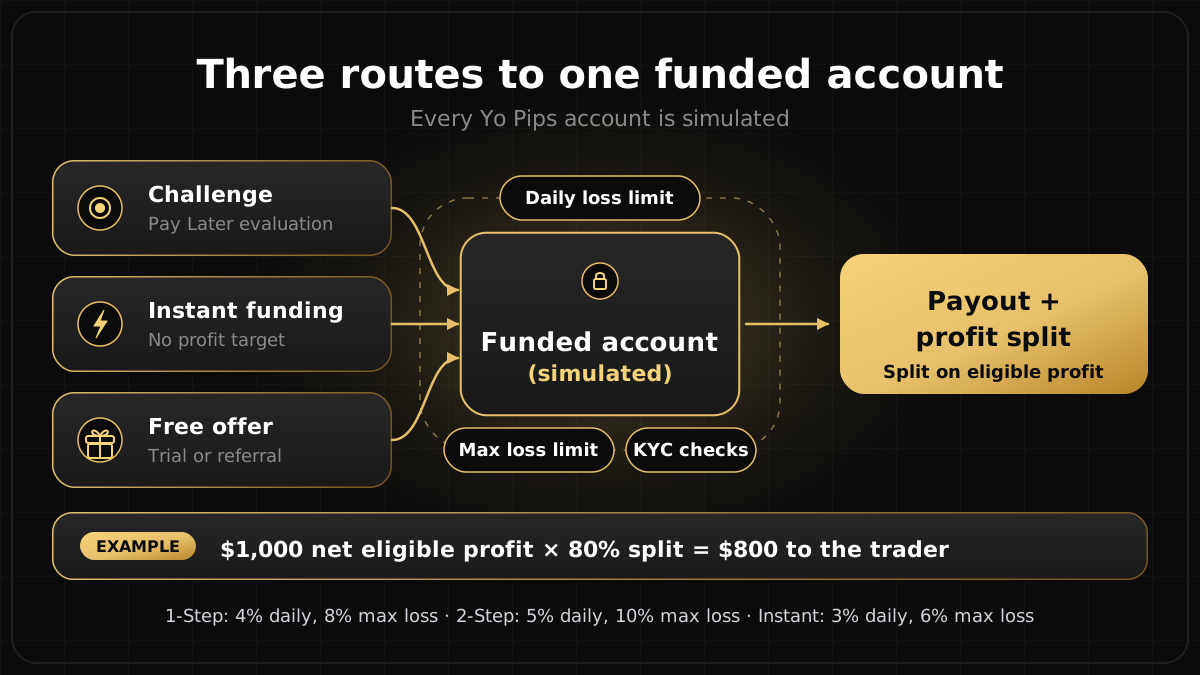
Funded Trading Account: What It Is and How to Get One
What a funded account is, the routes to one and the rules that keep it open.
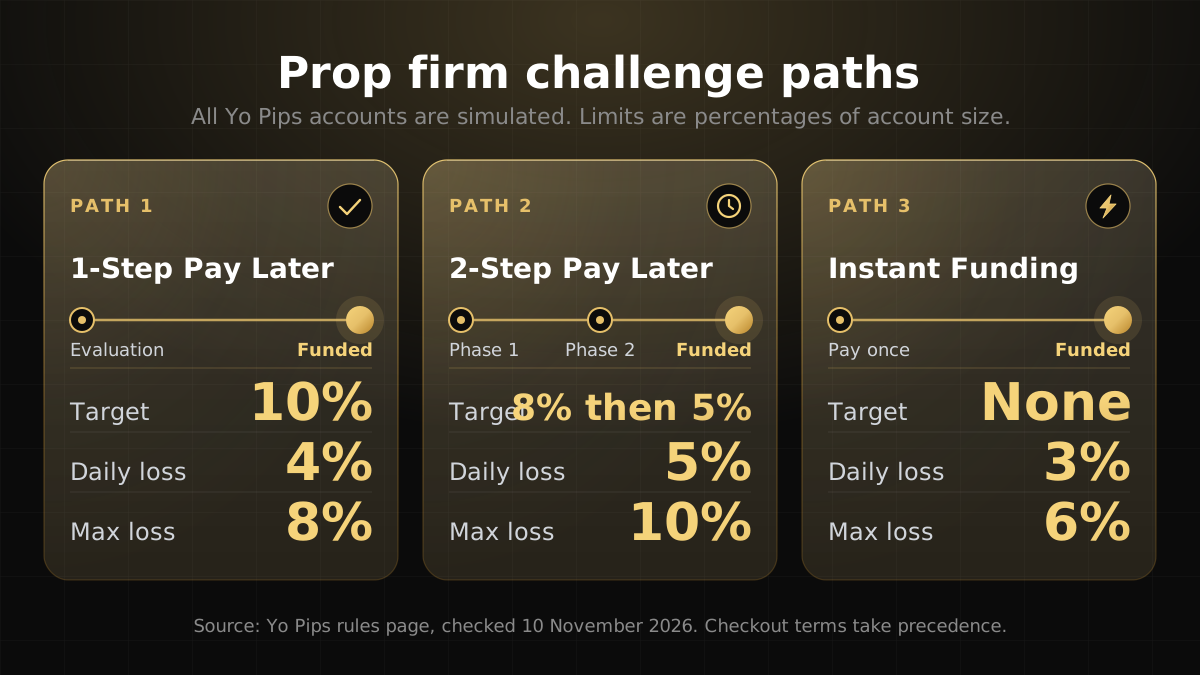
Prop Firm Challenge Explained: 1-Step vs 2-Step vs Instant Funding
Targets, loss limits and fees across one-step, two-step and instant models.
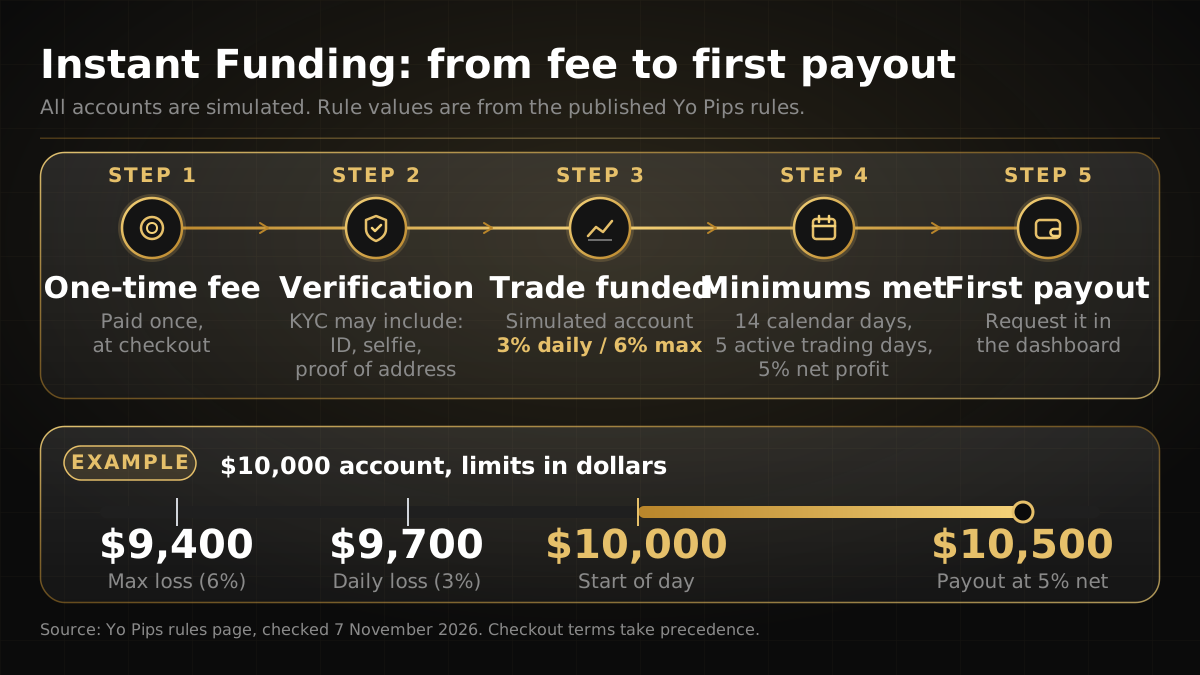
Instant Funding Prop Firm Accounts: How No-Evaluation Funding Works
How no-evaluation accounts work and what you give up for skipping the challenge.
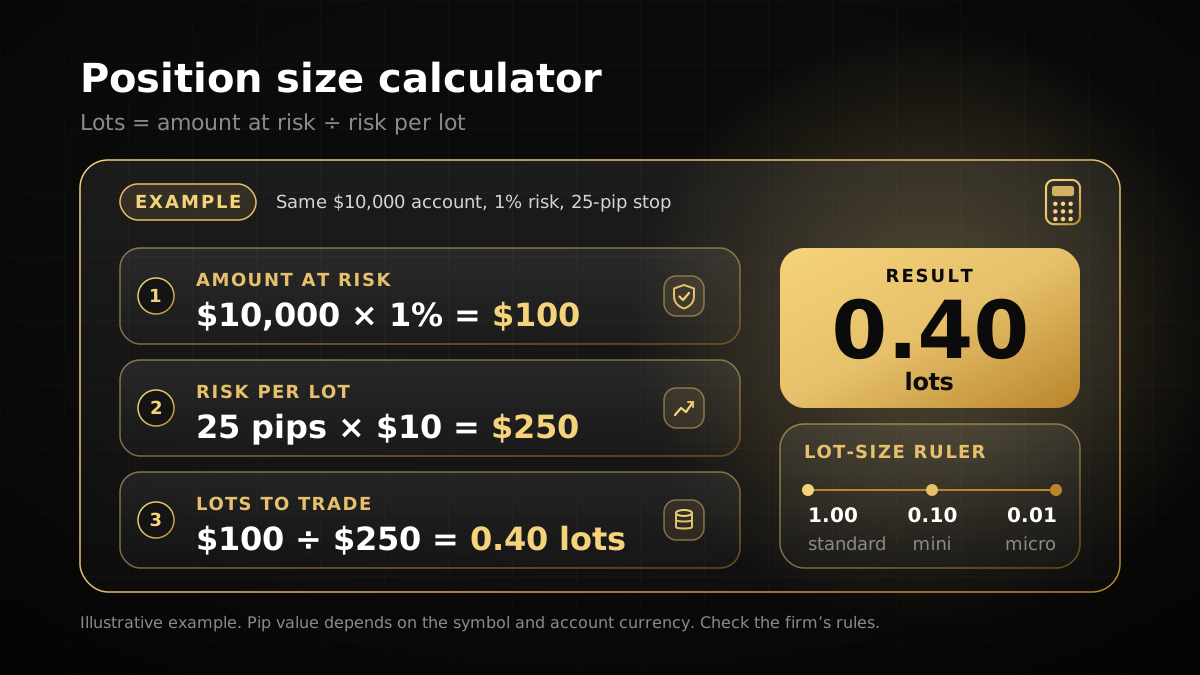
Position Size Calculator for Forex and Prop Firm Accounts
Work out lot size from risk and stop loss, and see how it fits a daily loss limit.
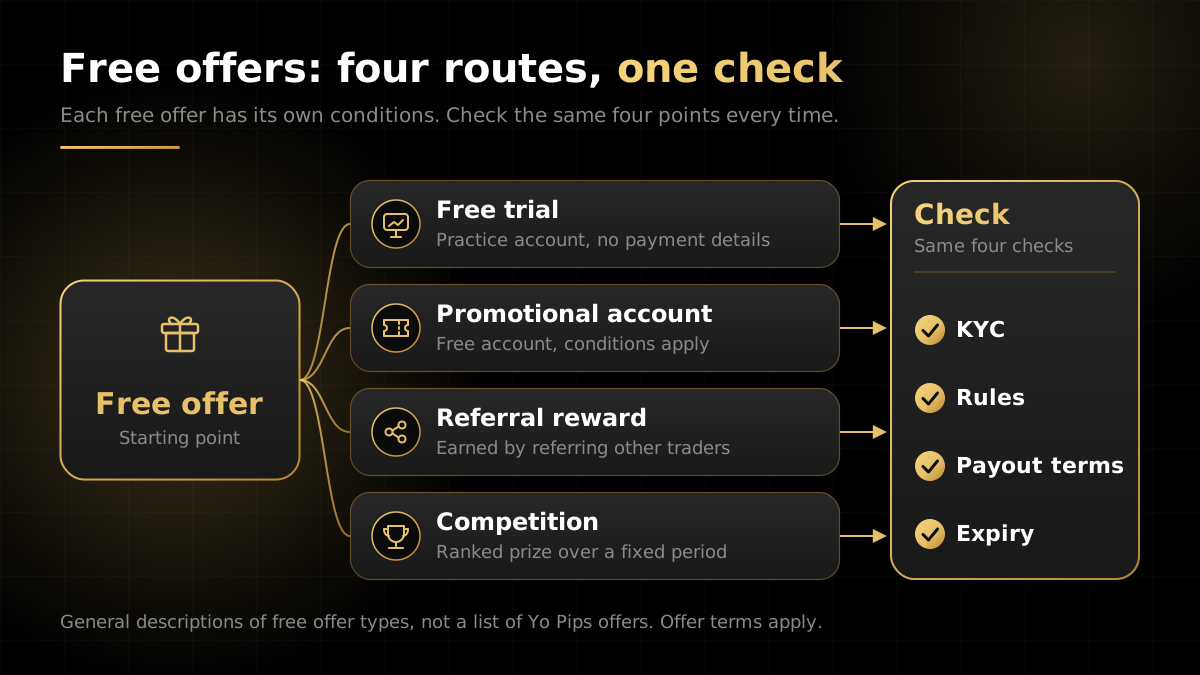
Free Funded Accounts: How They Work and What to Check
What free offers really include, and the conditions to read before you sign up.
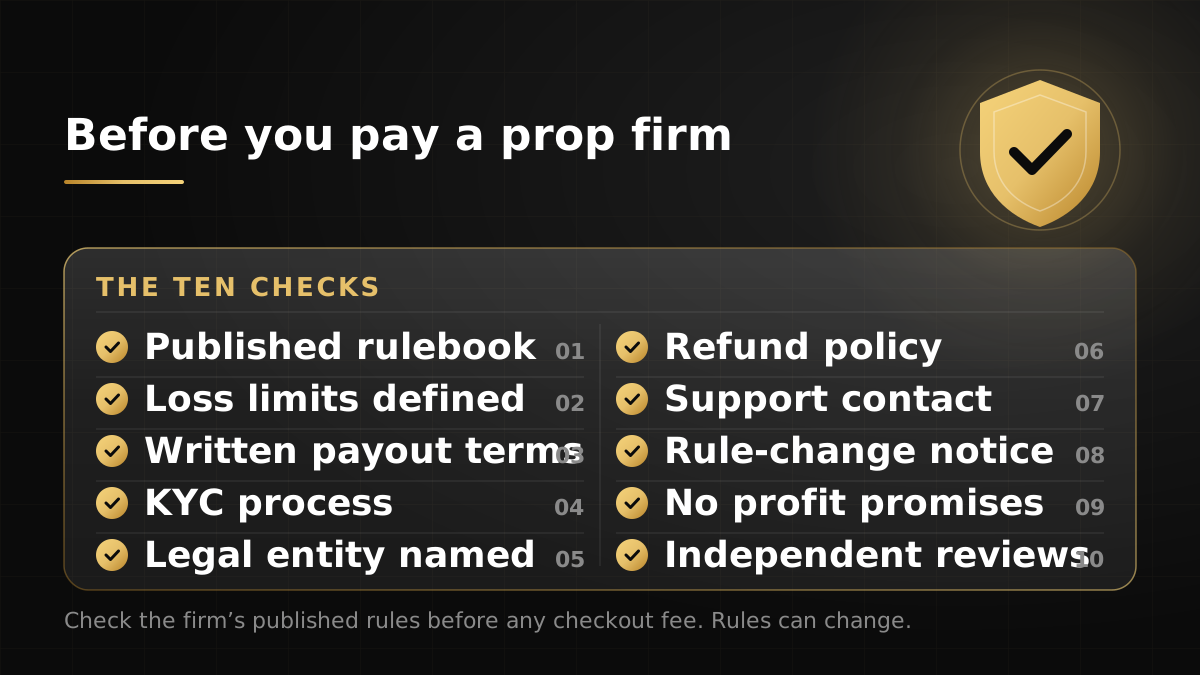
Are Prop Firms Legit? How to Check a Prop Firm Before You Pay
How the business model works and a checklist for vetting any firm.
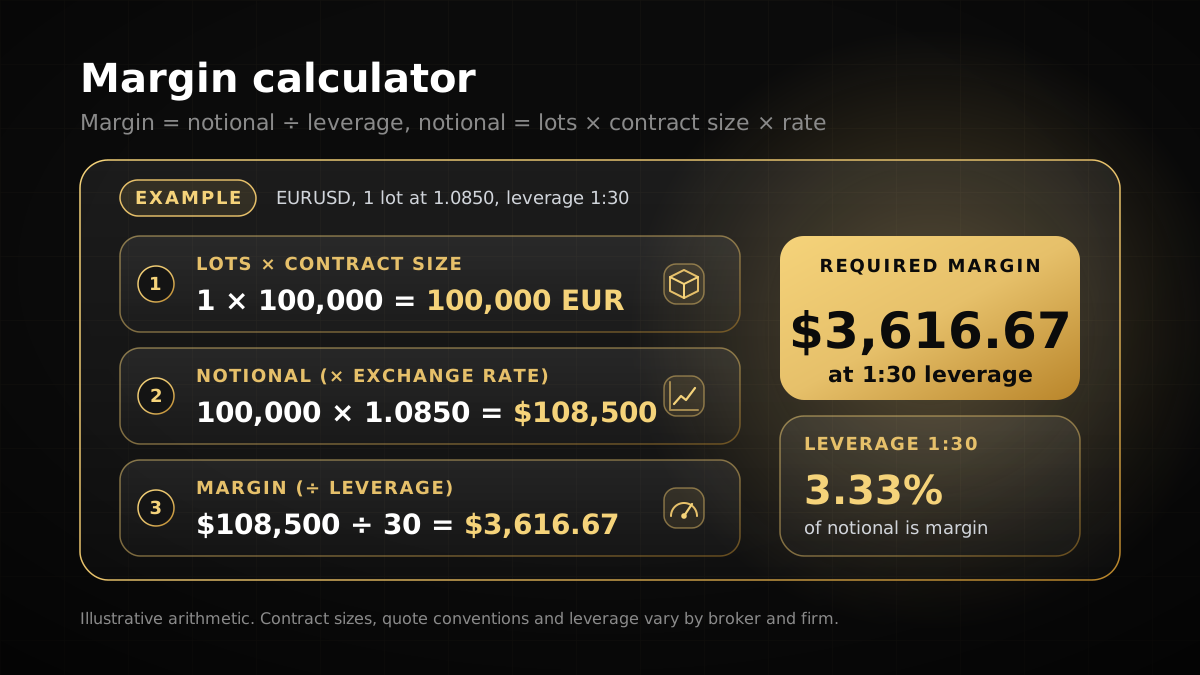
Margin Calculator: Work Out Forex Margin Before You Trade
Work out the margin a position ties up, and why margin is not the same as risk.
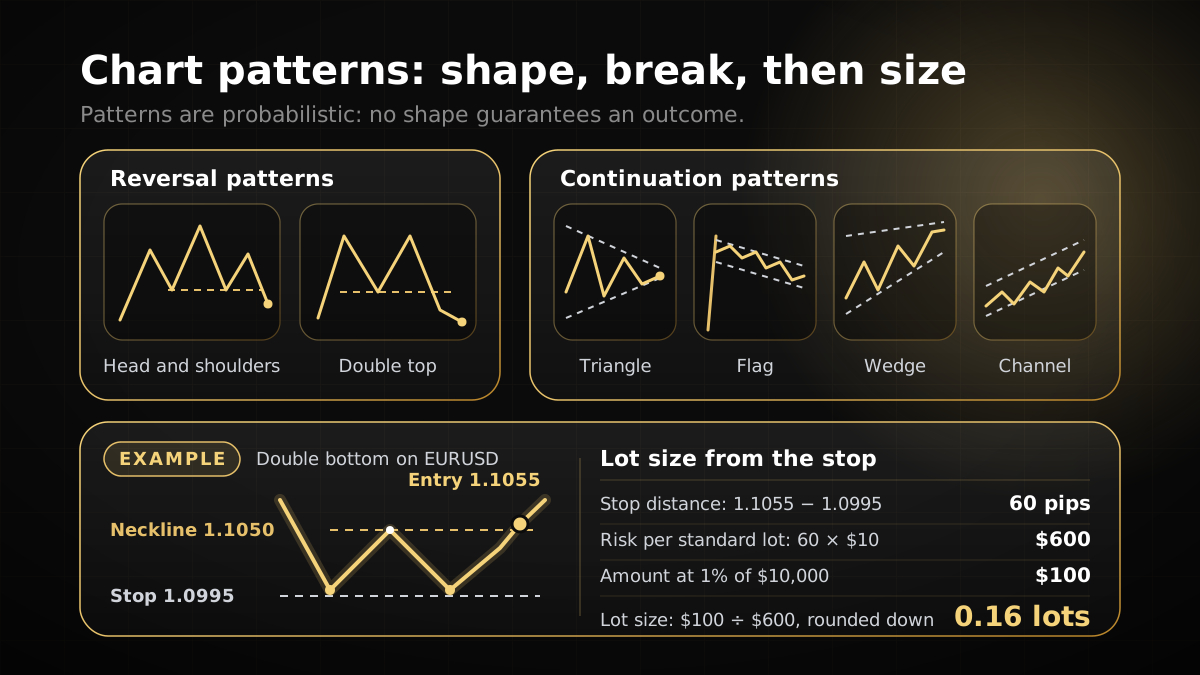
Chart Patterns for Prop Firm Traders: Types, Reliability and Risk Limits
Common chart patterns, what they can and cannot tell you, and how to trade them inside loss limits.
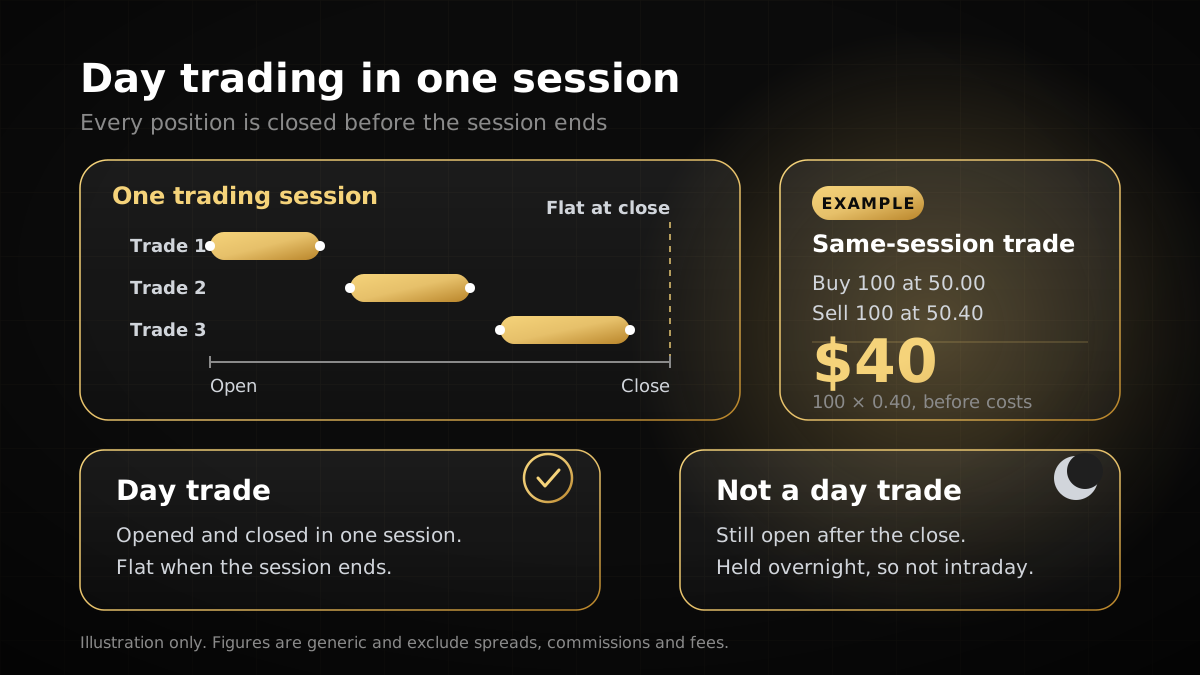
What Is Day Trading? Meaning, How It Works and the Risks
What day (intraday) trading is, what it costs and how prop firm loss limits shape it.
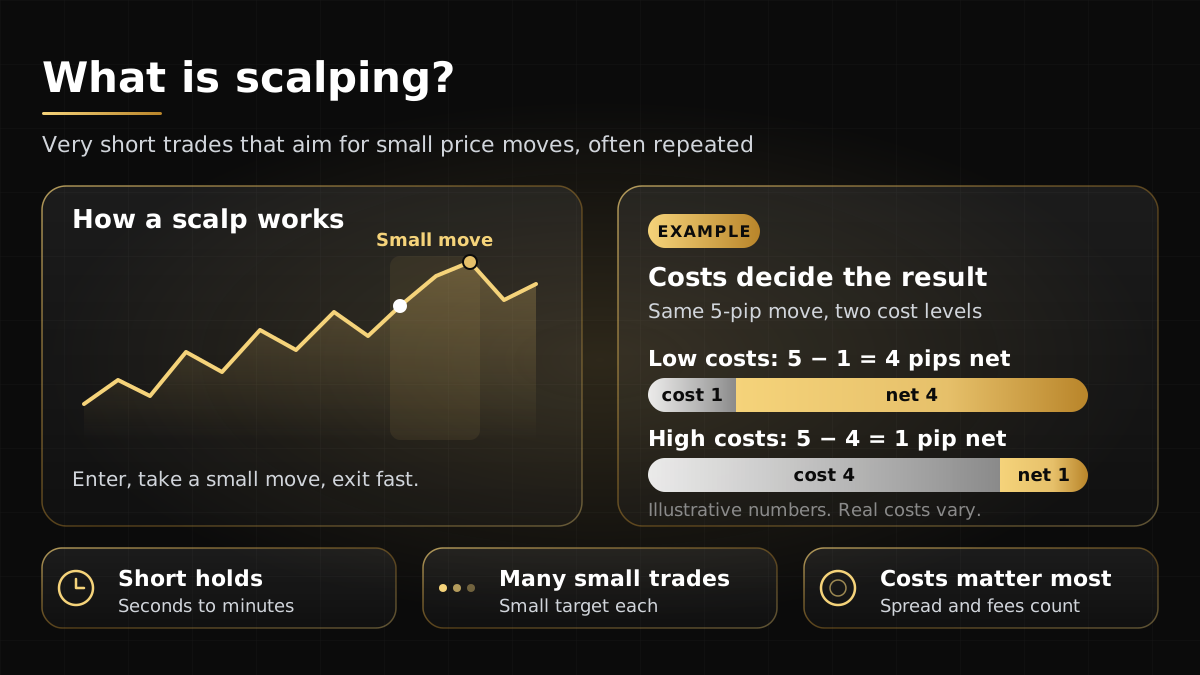
What Is Scalping in Trading? Meaning, Costs and Prop Firm Rules
What scalping is, why spreads and commissions decide it, and how firm rules treat it.
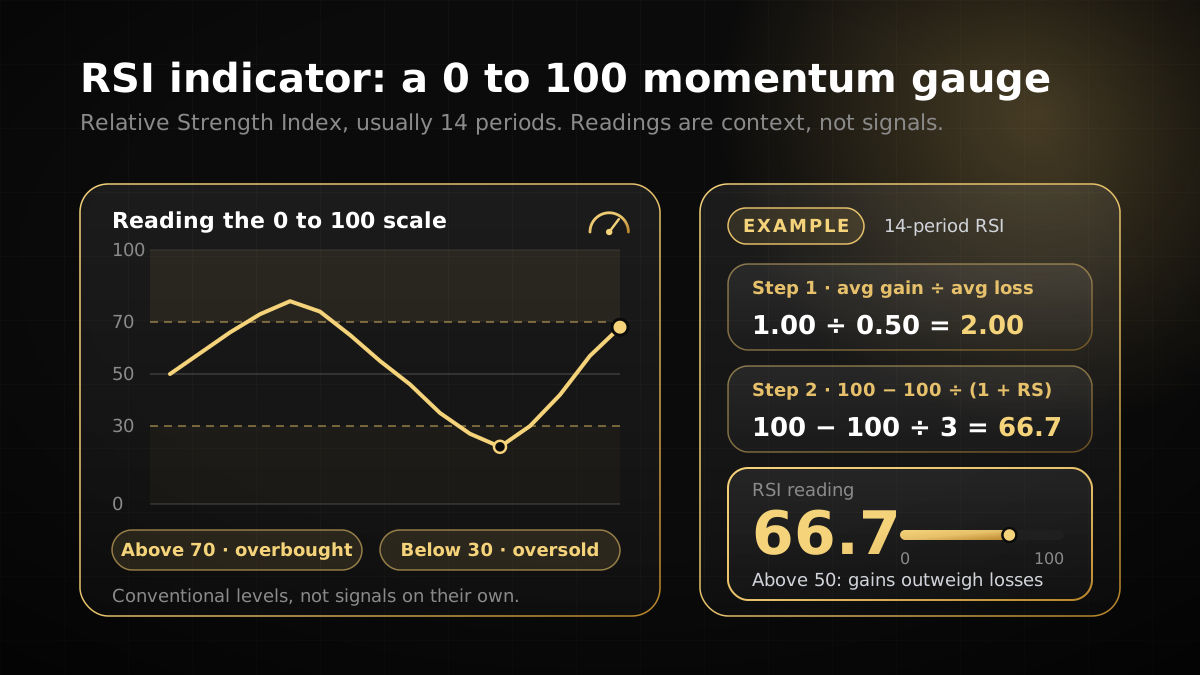
RSI Indicator Explained: What Is RSI and How Traders Read It
How the Relative Strength Index is calculated, read and misread.
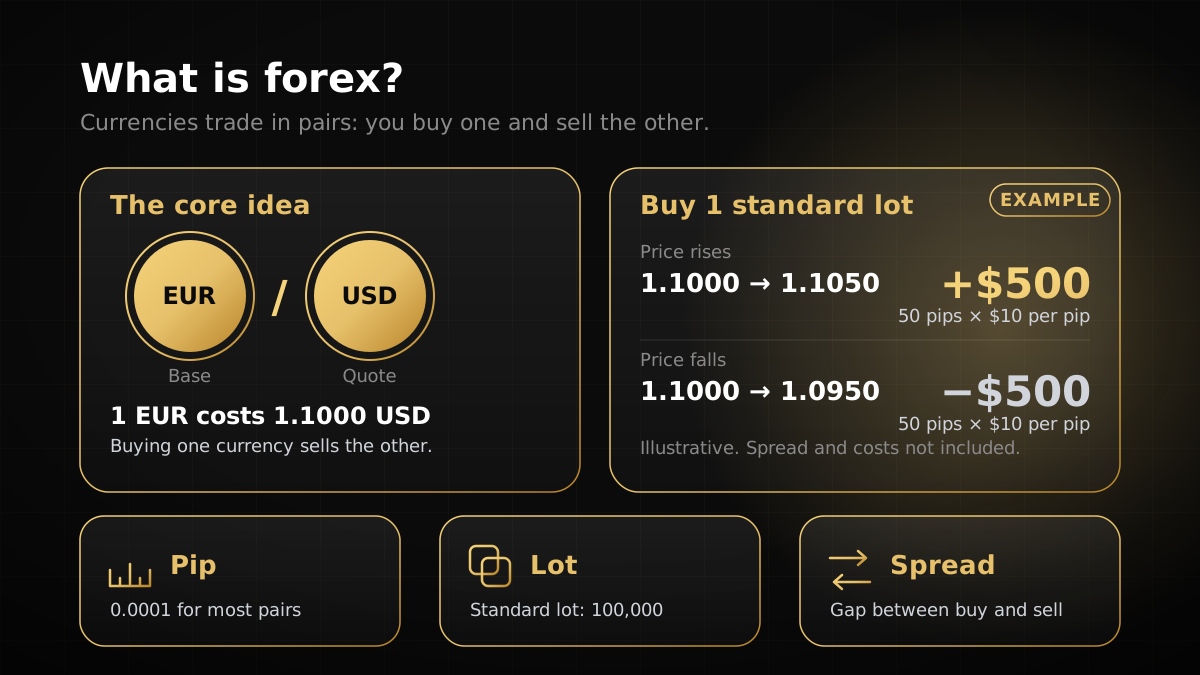
What Is Forex? How Currency Trading Works for New Traders
Currency pairs, pips, lots and leverage, and the risks of trading them.
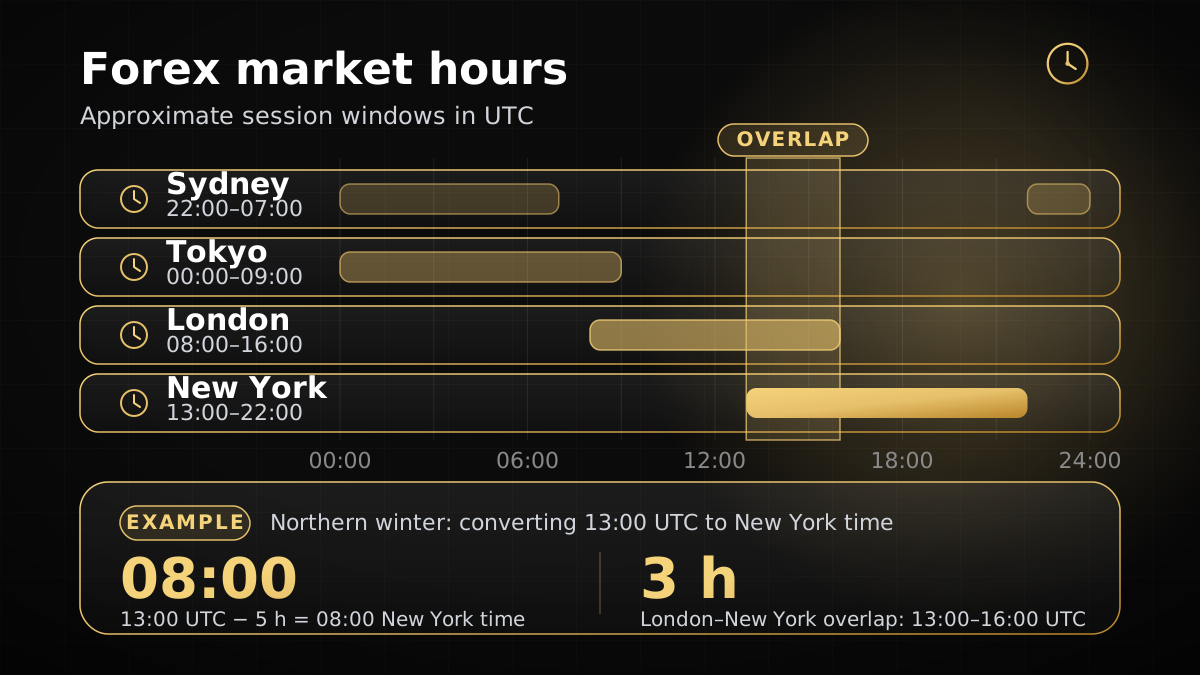
Forex Market Hours: Trading Sessions and Session Times in UTC
The four main sessions in UTC, the overlaps, and daylight-saving changes.
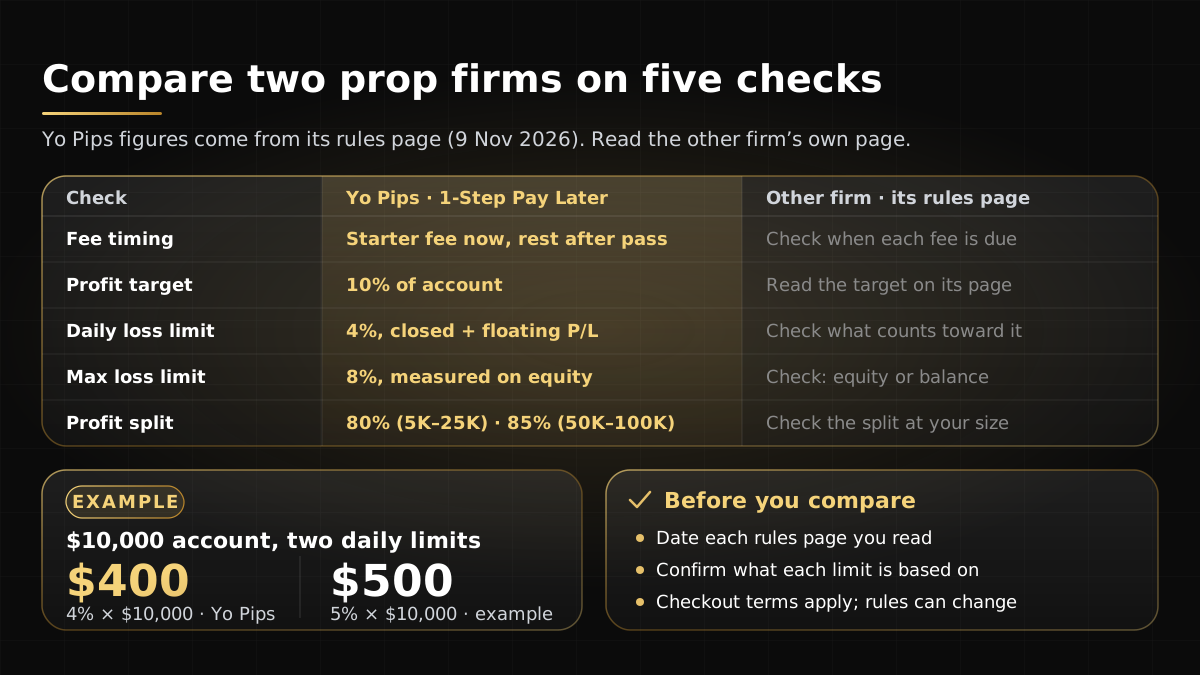
Yo Pips vs The5ers: A Side-by-Side Prop Firm Comparison
Both firms' published terms side by side, with sources and dates.
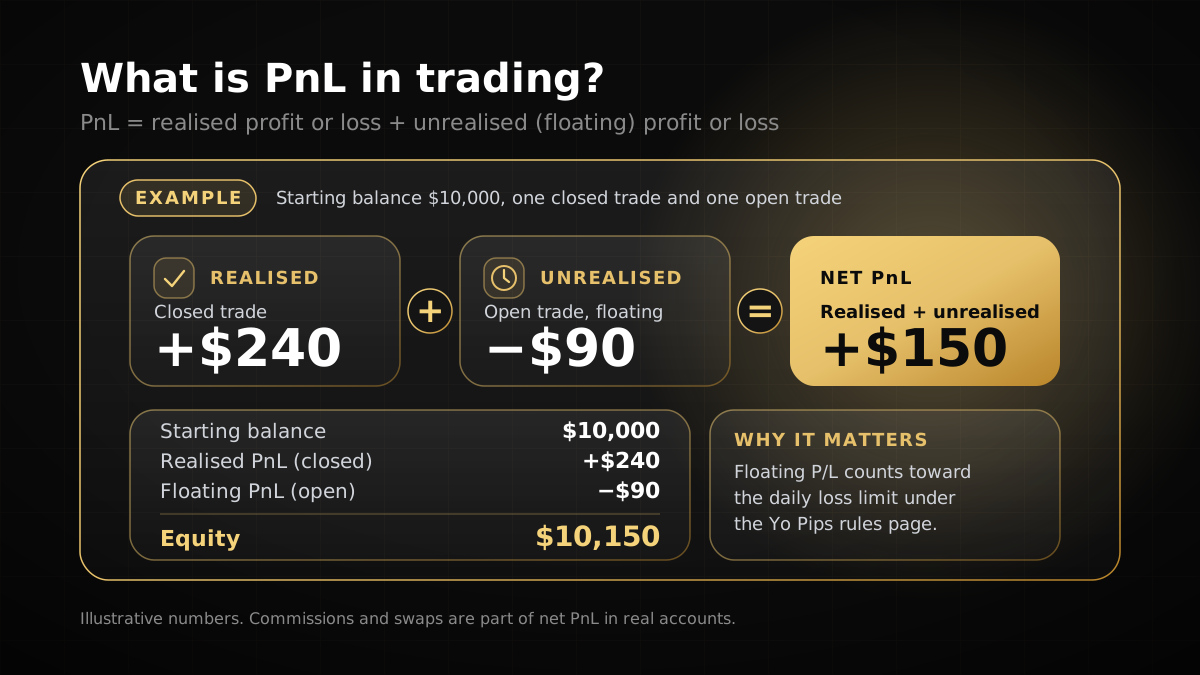
What Is PnL in Trading? Profit and Loss Explained for Prop Accounts
Realised versus floating PnL, and how both count toward prop firm limits.
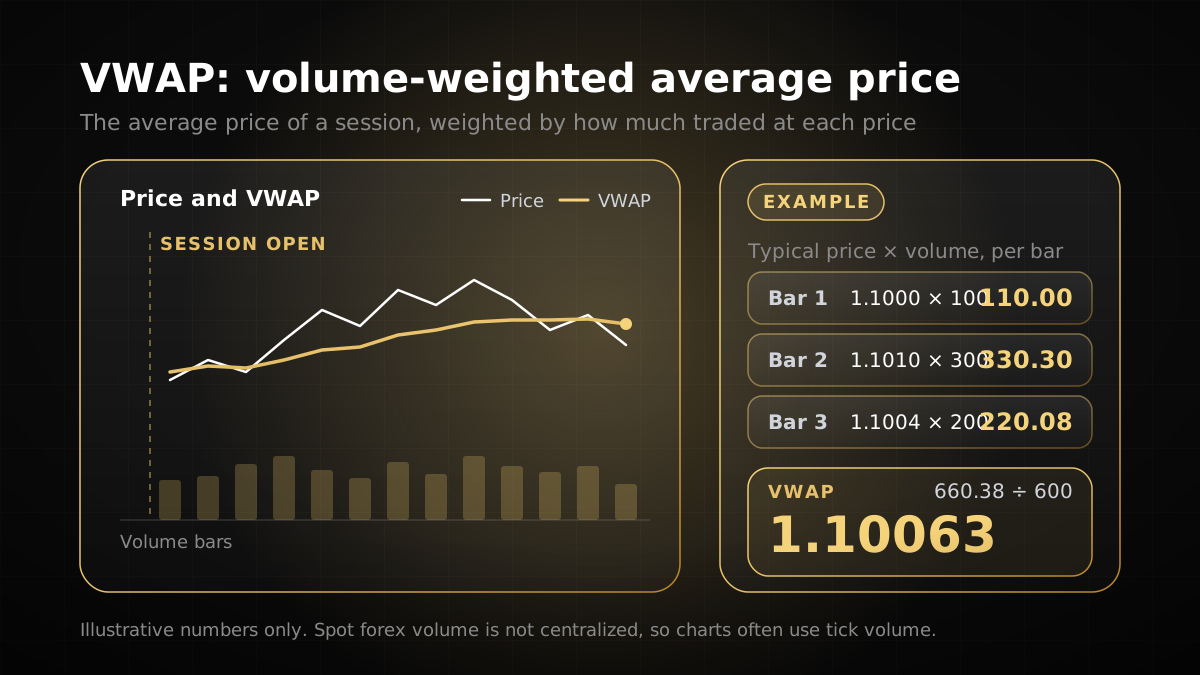
What Is VWAP in Trading? Volume-Weighted Average Price Explained
The VWAP formula, a worked example and why spot forex volume is different.
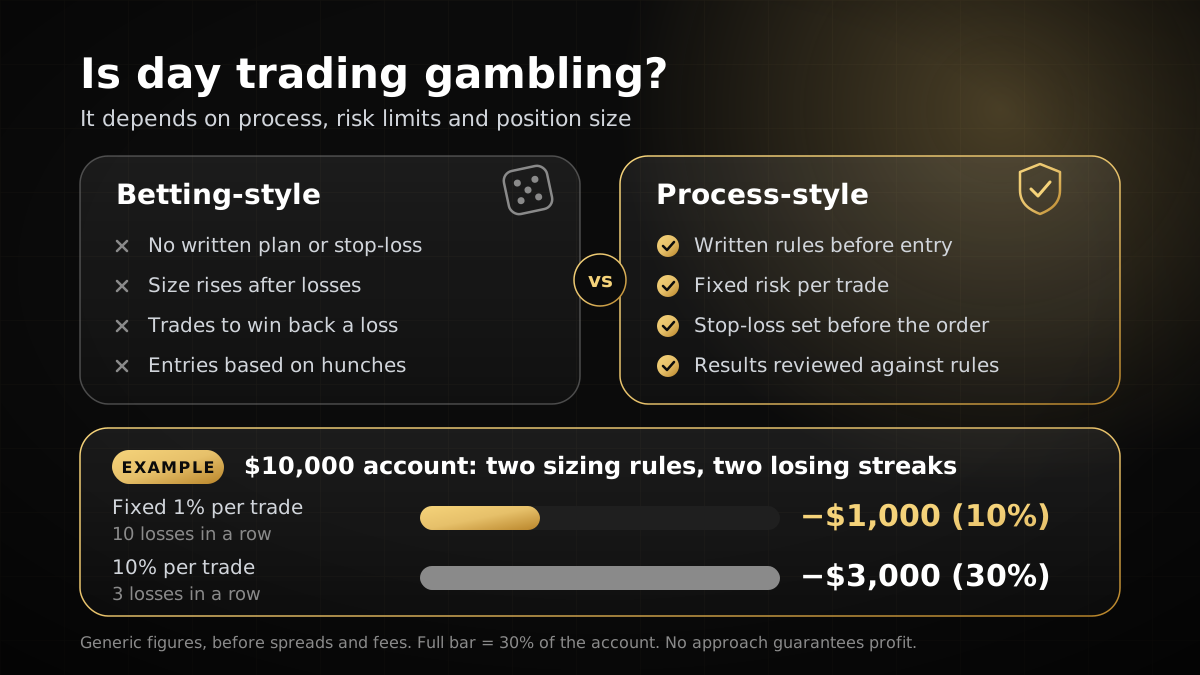
Is Day Trading Gambling? What Separates Trading From Betting
What separates a tested, rule-bound process from a bet, and the warning signs.
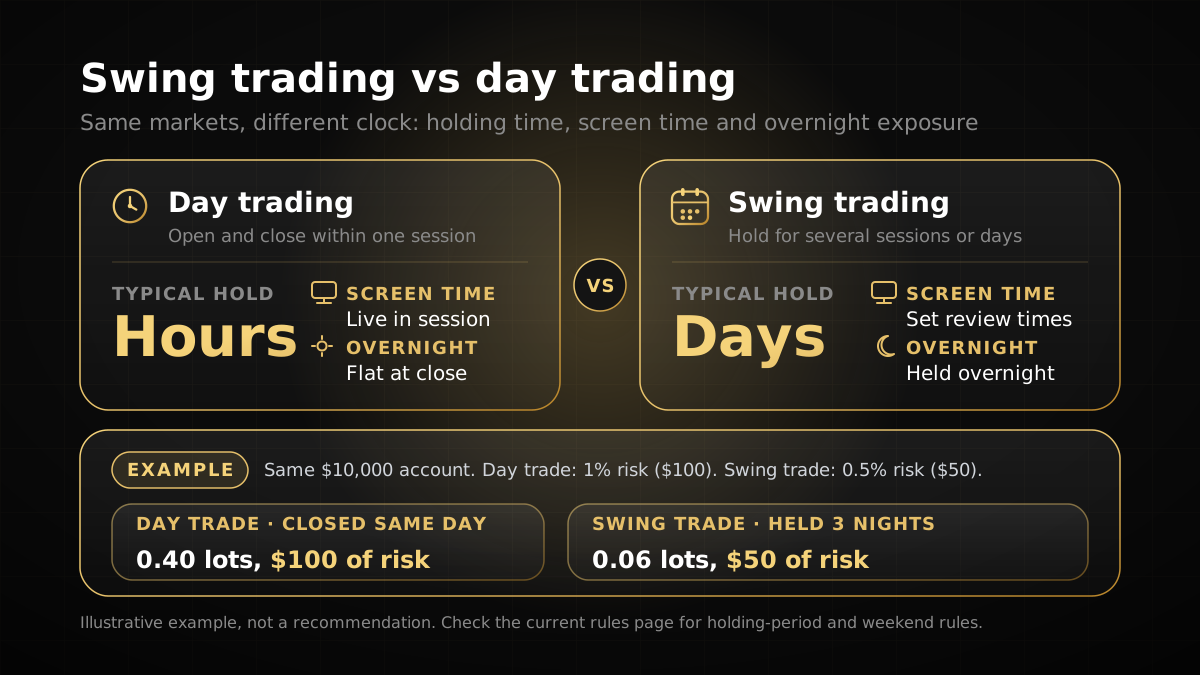
Swing Trading vs Day Trading: Which Style Fits You?
Holding time, costs, overnight exposure and loss limits for each style.
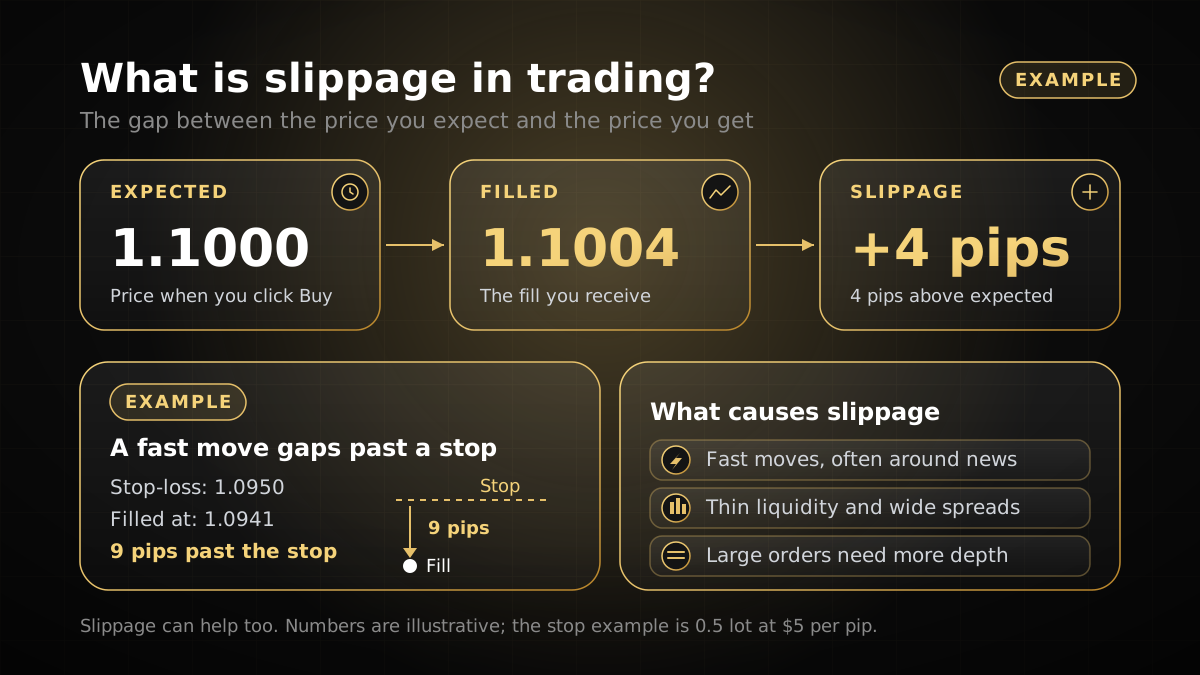
What Is Slippage in Trading? Why Fills Differ in Fast Markets
Why fills differ from the expected price and how that hits stops and limits.
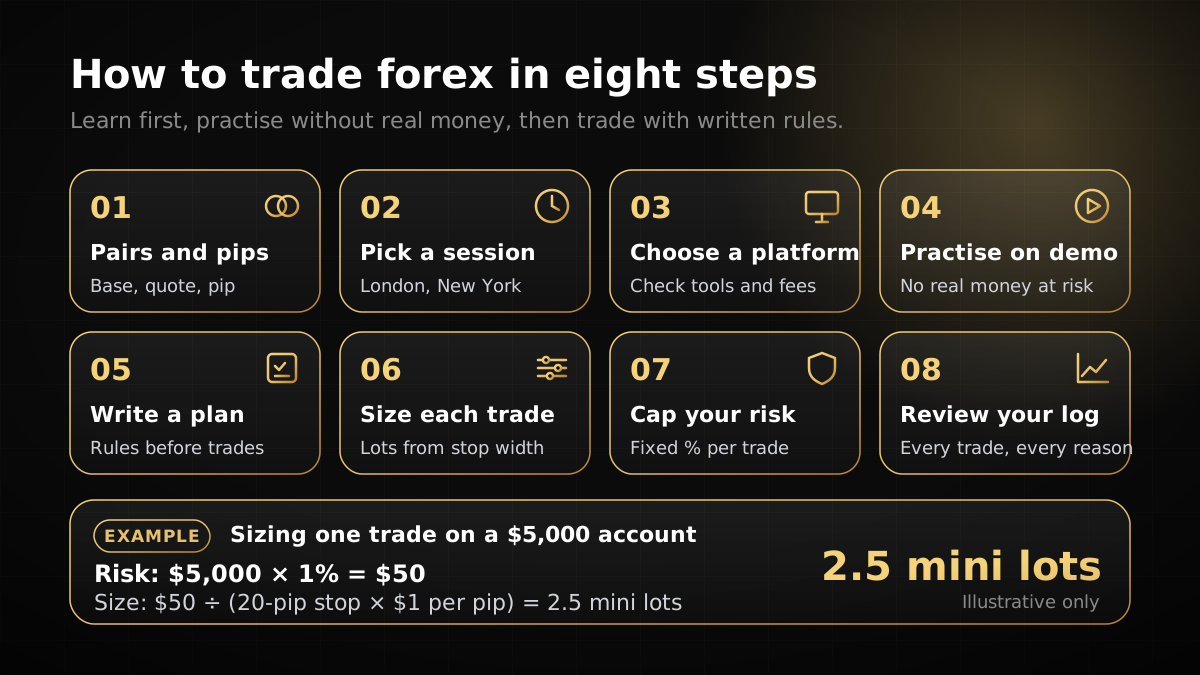
How to Trade Forex: A Step-by-Step Guide for Beginners
A practical step list from first lesson to a rule-based routine.
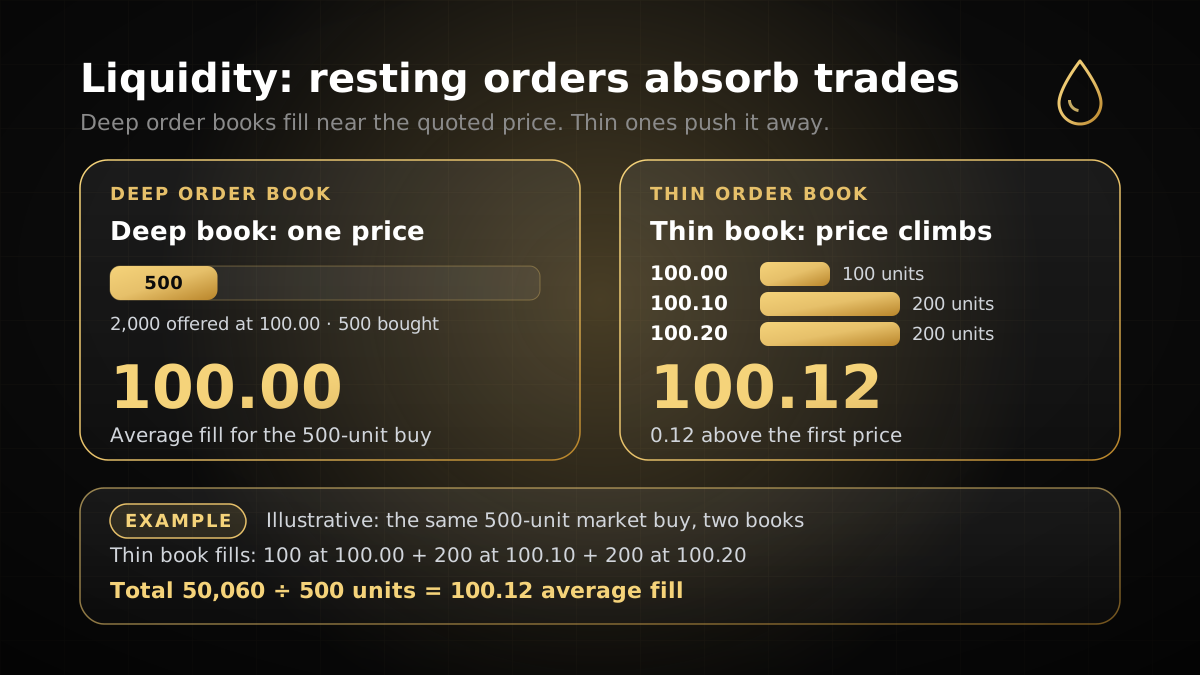
What Is Liquidity in Trading? Meaning, Spreads and Execution
How liquidity shapes spreads, slippage and the best times to trade.
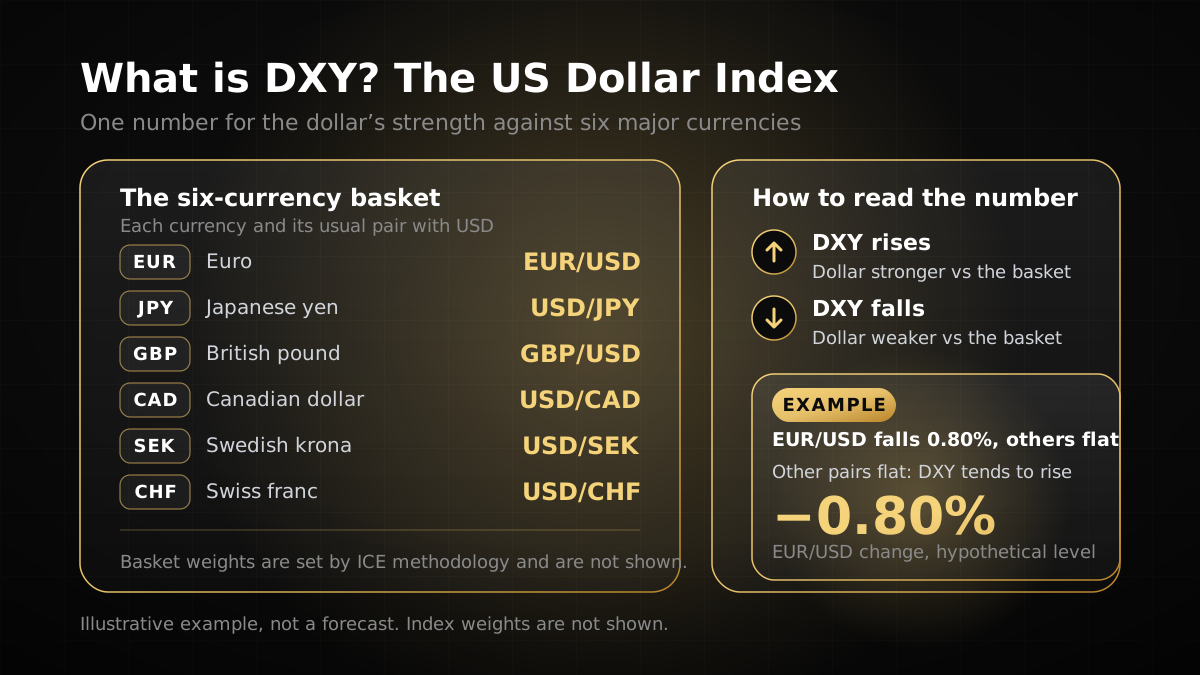
What Is DXY? The US Dollar Index and What It Measures
The dollar index basket, its weights and how forex traders use it.
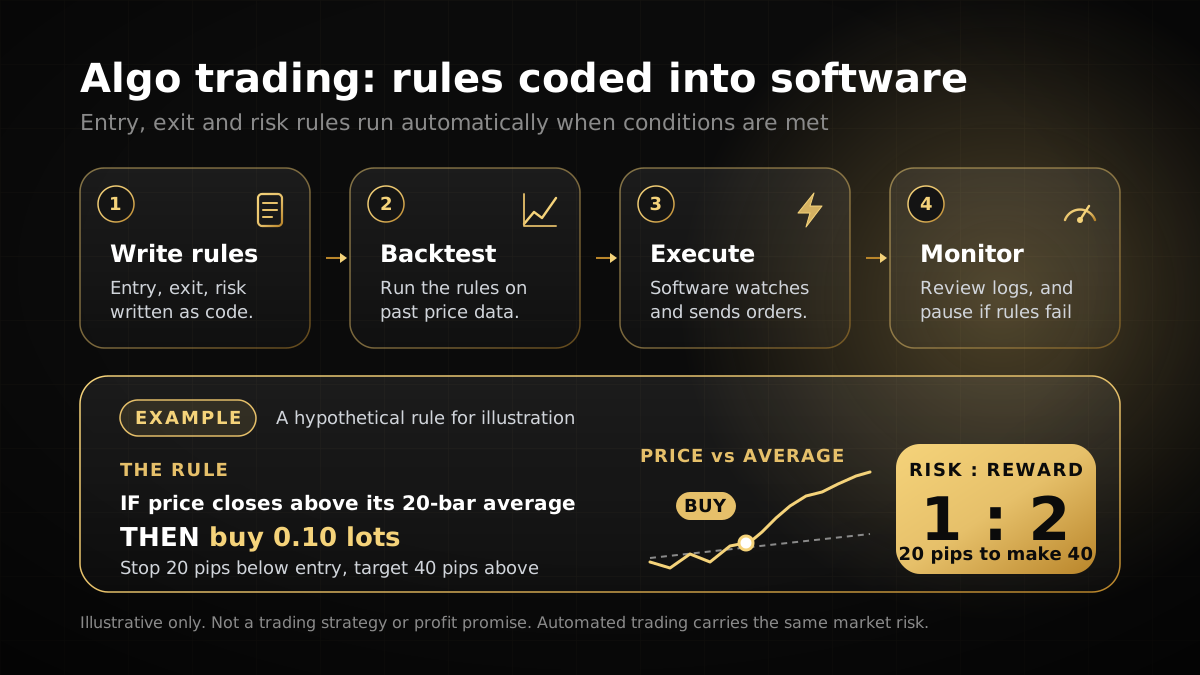
What Is Algo Trading? How Algorithmic Trading Works
How rule-based software trades, how it is tested and where it goes wrong.
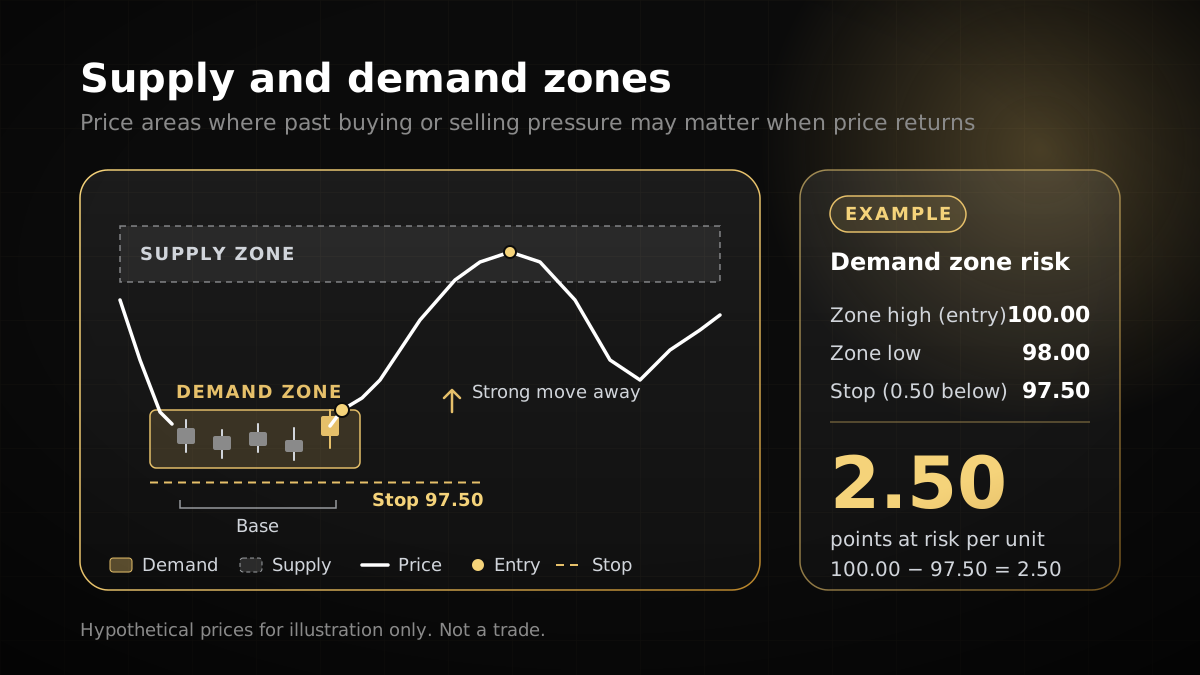
Supply and Demand Zones: What They Are and How Traders Mark Them
How traders mark supply and demand zones and manage risk around them.
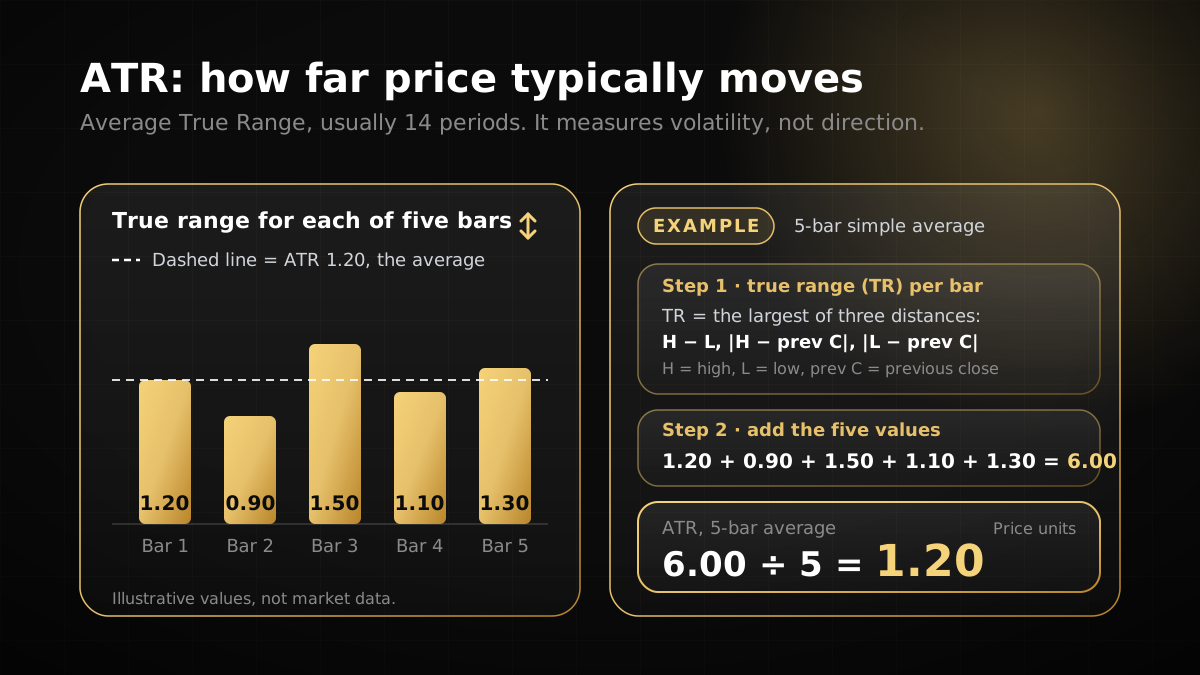
ATR Indicator Explained: What Is ATR and How Traders Use It
The true range formula, a worked example and ATR-based stops.
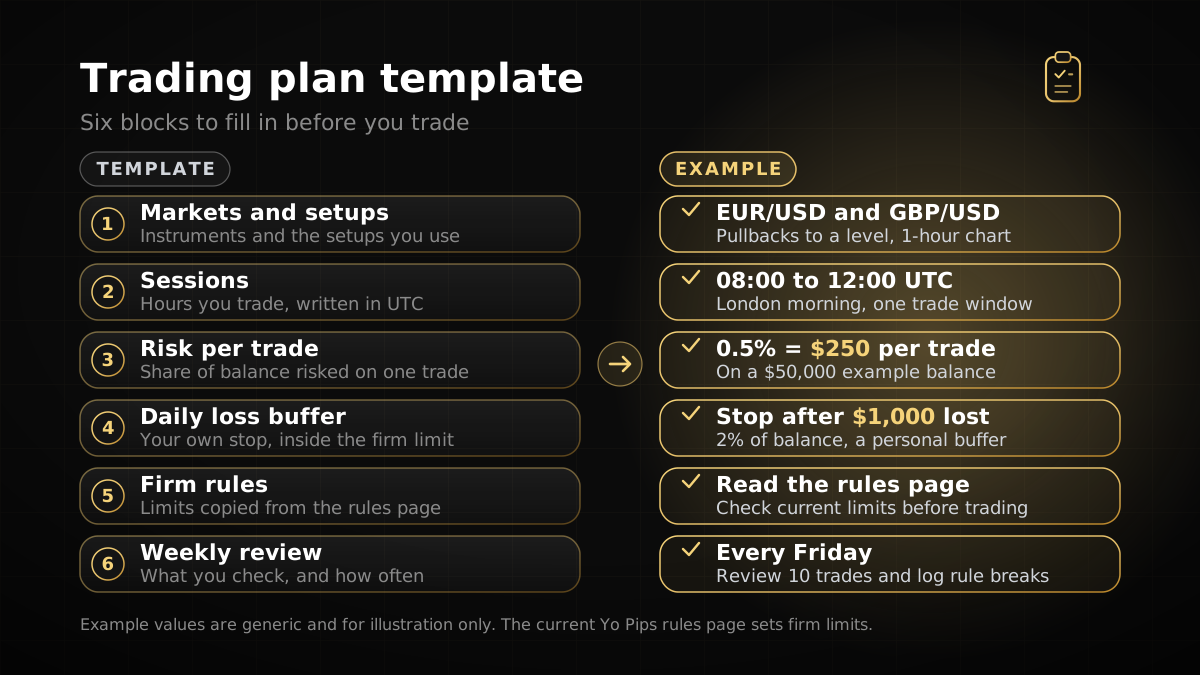
Trading Plan Template for Prop Firm Challenges
A fill-in plan for a challenge, with a worked example.
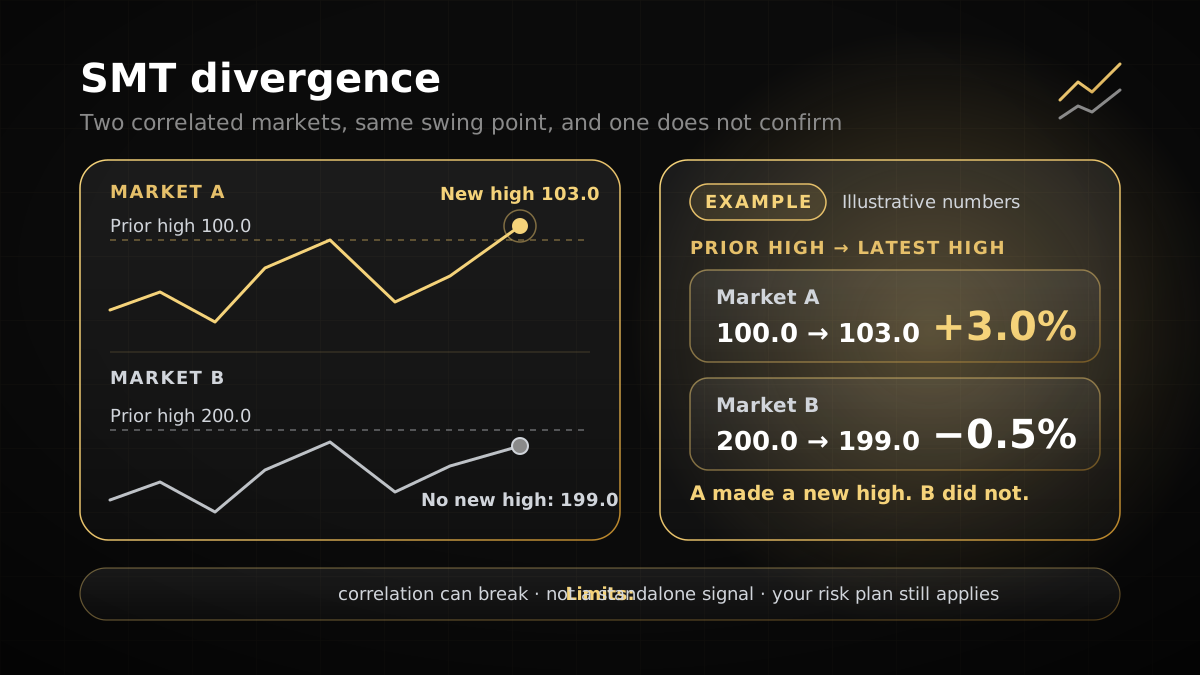
What Is SMT Divergence in Trading? Meaning and Limits
How SMT divergence compares correlated markets, and its limits.
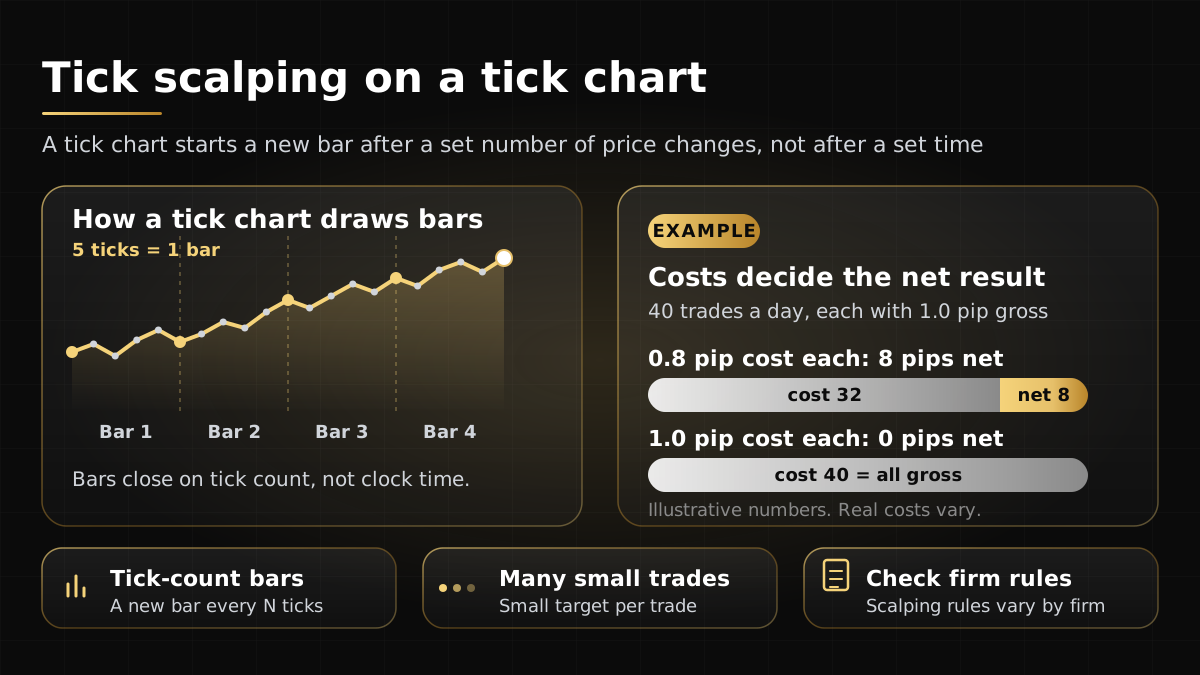
Tick Scalping Explained: Method, Costs and Prop Firm Risk Limits
Why costs dominate tick scalping and how firm rules apply.
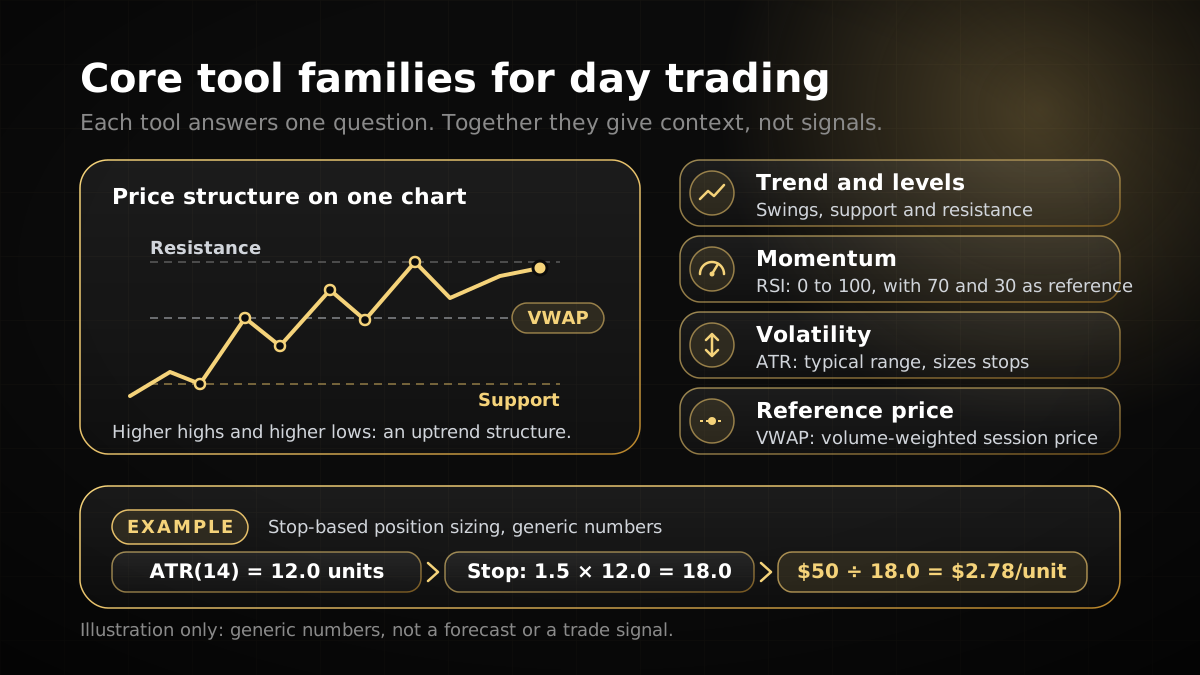
Technical Analysis for Day Trading: The Core Tools Explained
How trend, structure and indicators fit together for intraday trading.
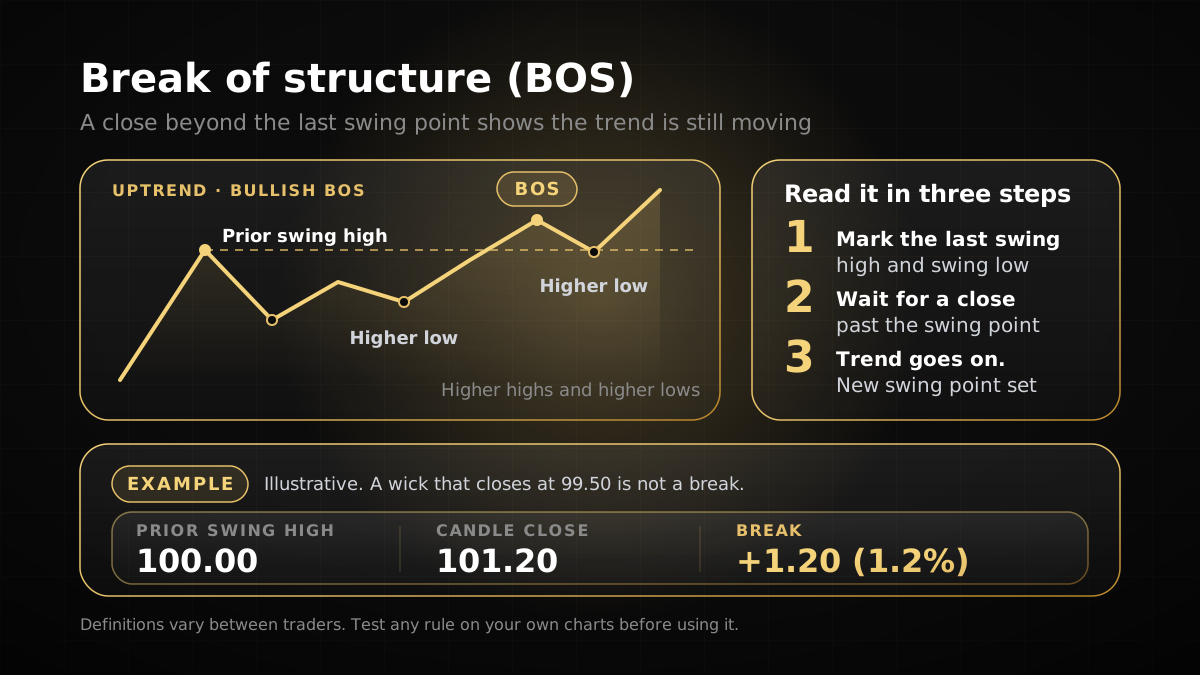
What Is BOS in Trading? Break of Structure Defined
How a break of structure is marked and how it differs from CHoCH.
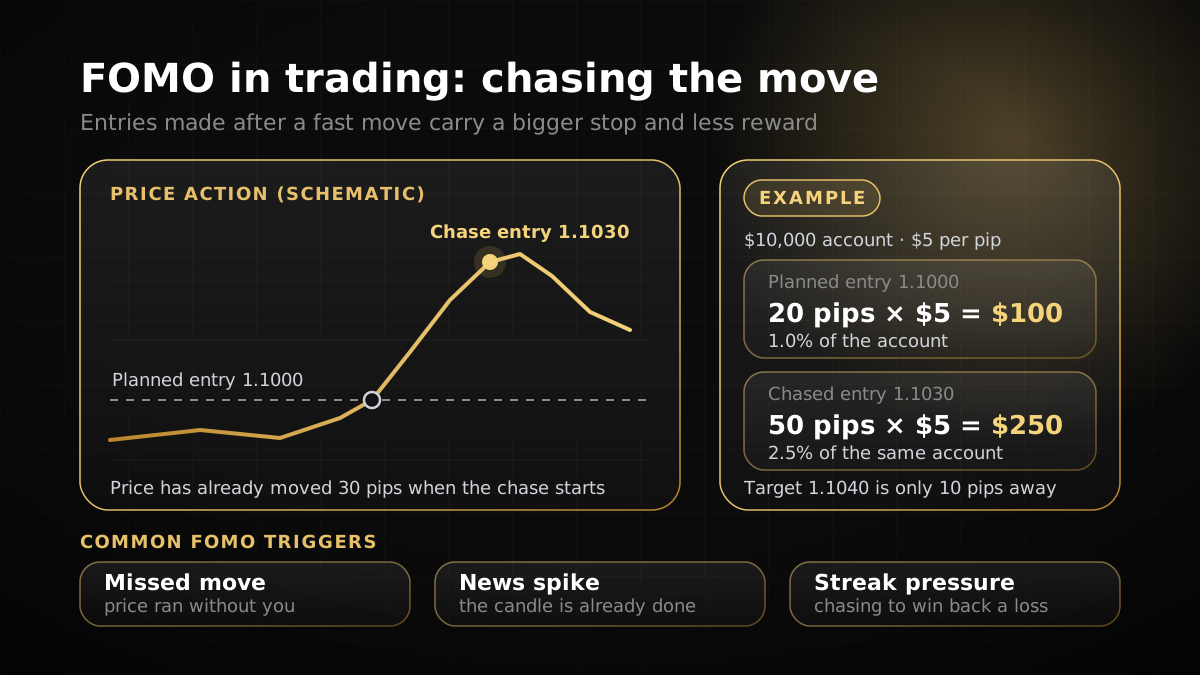
FOMO in Trading: Why Traders Chase Entries and How to Stop
How fear of missing out drives chasing, and rules that stop it.
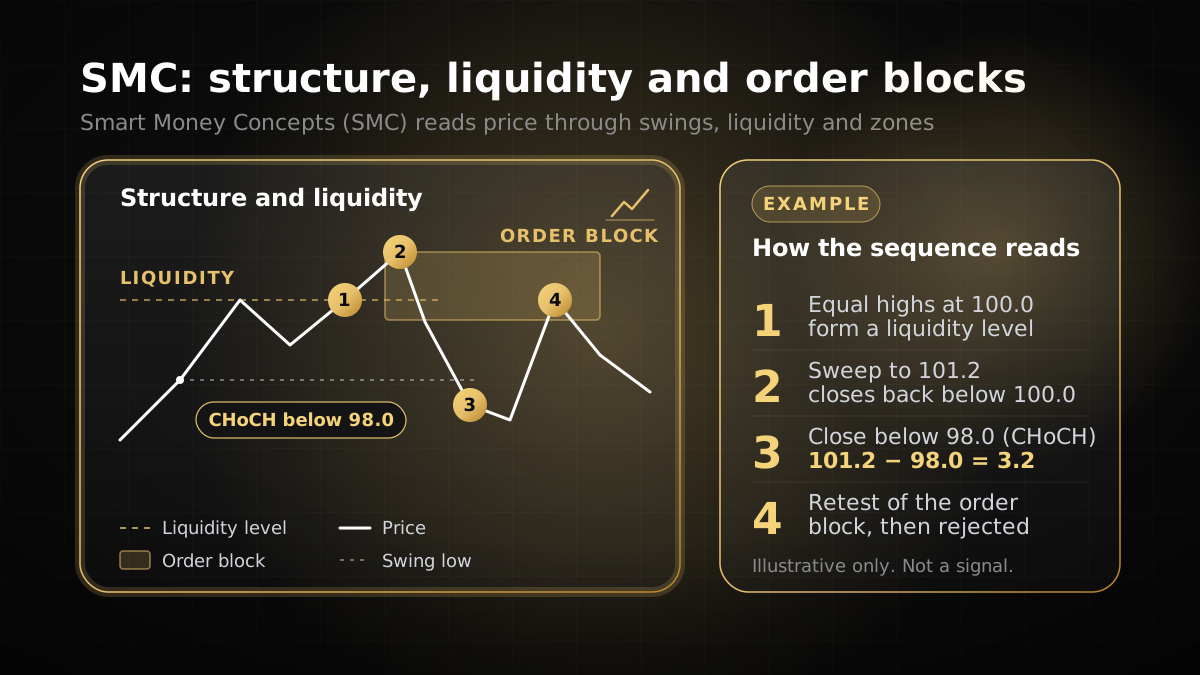
What Is SMC Trading? Smart Money Concepts Explained
The core SMC terms, how they fit together and what the evidence says.
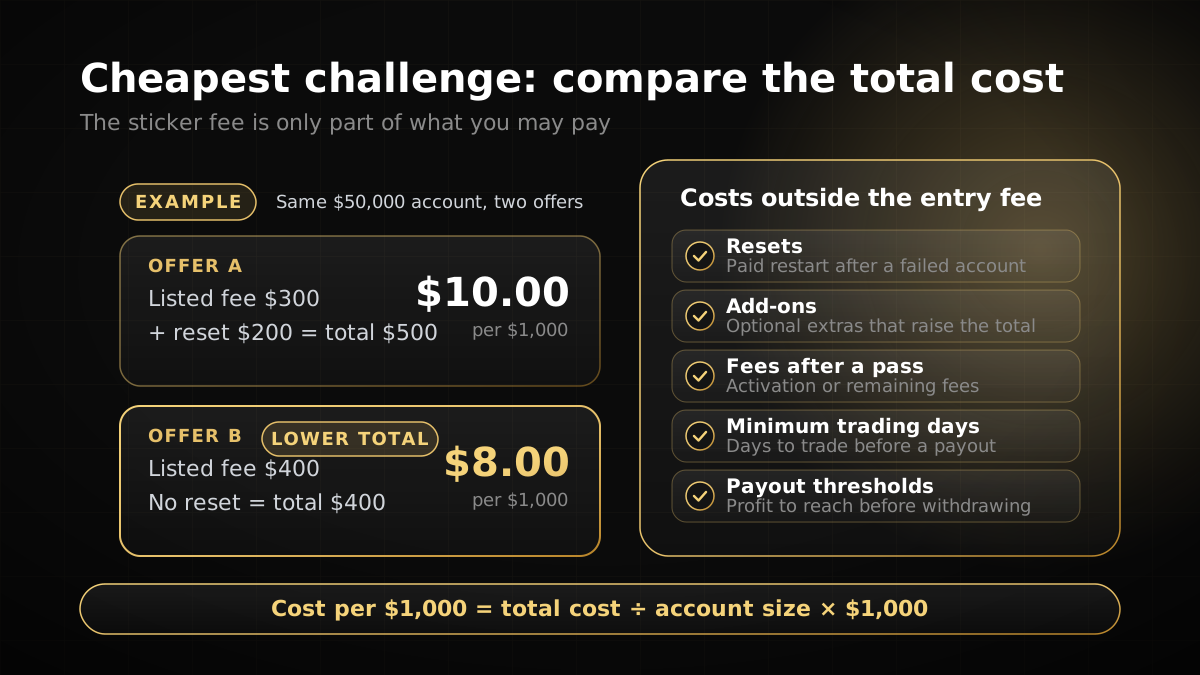
Cheapest Prop Firm Challenges Compared: What You Pay Now and Later
Entry fees from seven firms' own pages, and the costs a low fee leaves out.
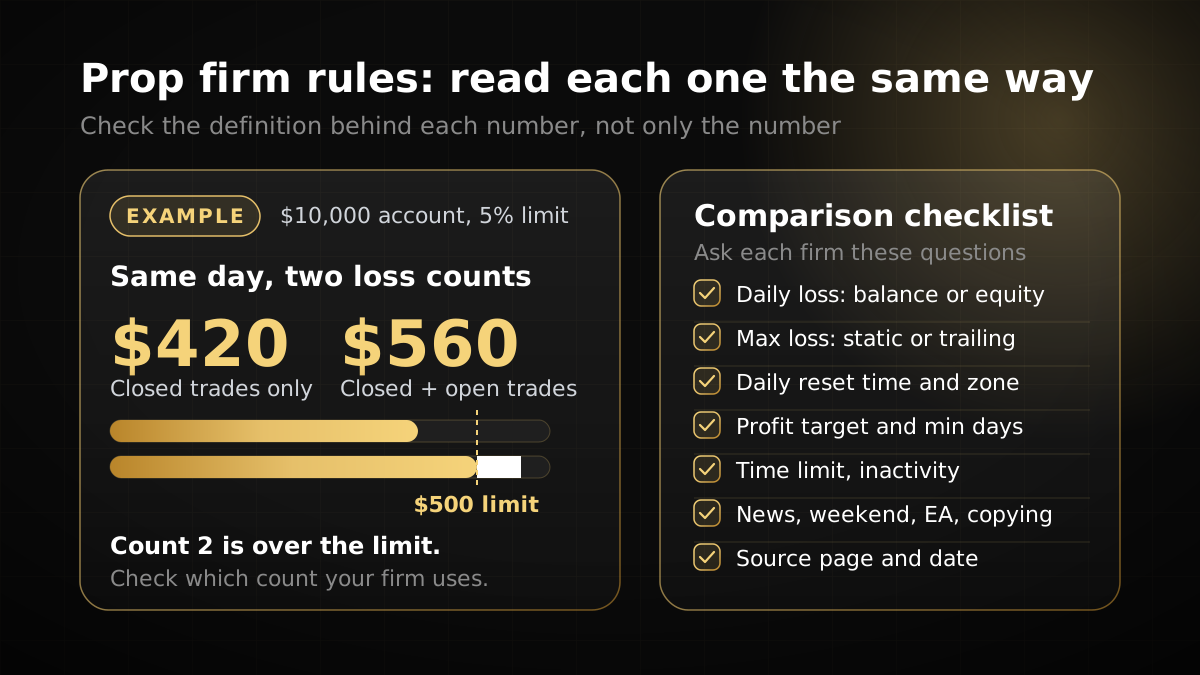
Prop Firm Rules Compared: FTMO Rules and Other Firms Side by Side
Drawdown, minimum-day, news, weekend, EA and copy-trading rules side by side, with sources.
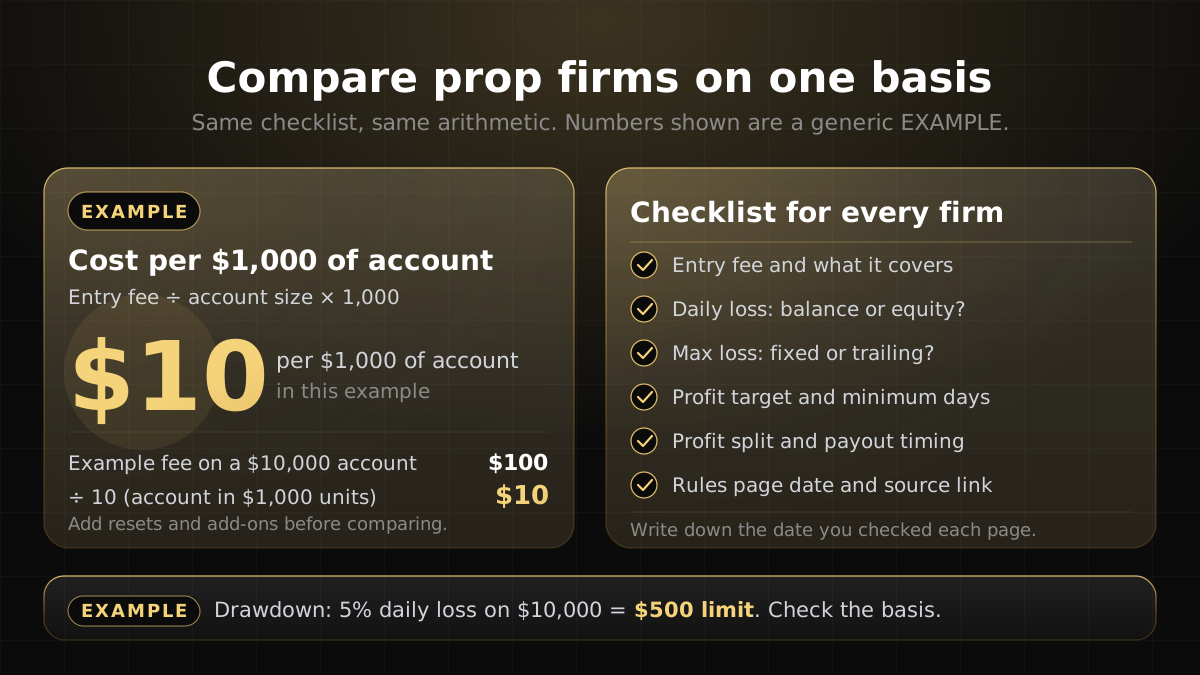
FTMO Alternatives: Prop Firms Compared on Rules, Fees and Payouts
Firms with a model similar to FTMO's, compared on the same criteria with sources.
Trading leveraged products carries a high risk of loss. Yo Pips challenges and funded accounts are simulated accounts, and passing an evaluation does not guarantee a payout. These guides are education, not investment advice. Check the current rules and plans before you buy.