Pay Later Prop Firm Red Flags: Beware the Sirens of Funded Trading Folly!
In the glittering yet treacherous waters of proprietary trading, where fortunes are made and lost faster than a bad crypto pump, the siren song of 'pay later' prop firms beckons with promises of funded glory without upfront costs. Oh, dear aspiring trader, do not be swayed by this melodic mirage! These firms, cloaked in the garb of opportunity, often hide a labyrinth of pitfalls designed to ensnare the unwary. Imagine waking up to a trading account bursting with capital—$100,000 or more!—all while deferring your entry fee until after you've proven your mettle. Sounds like a dream, doesn't it? But alas, in the grand theater of financial markets, dreams frequently morph into nightmares when red flags wave like cautionary banners in a storm.
Why does this topic matter with such urgent, hype-inducing fervor? Because the prop trading industry, exploding in popularity post-pandemic with retail traders flocking to platforms like moths to a flame, is rife with opportunists. According to a 2023 report by the Financial Conduct Authority, over 70% of unregulated trading schemes lead to investor losses exceeding initial stakes. Pay later options amplify this risk, luring in novices with zero-barrier entry only to bombard them with exploitative terms later. If you're eyeing these firms to bypass the cash crunch and dive into forex, stocks, or futures trading, ignoring the red flags could mean forfeiting not just your fees but your hard-earned capital and confidence.
In this mock-formal exposé, we'll dissect the most egregious warnings with the precision of a surgeon wielding a scalpel forged in skepticism. We'll preview the unholy trinity of red flags: unrealistic promises that defy market gravity, hidden fees lurking like fiscal landmines, and transparency voids deeper than the Mariana Trench. Buckle up, trader; by the end, you'll be armed with the hype-fueled knowledge to navigate these waters or steer clear altogether. From real-world horror stories to step-by-step evasion tactics, this guide is your urgent beacon in the fog of funded trading folly. Let's plunge in before another victim falls prey!
Unrealistic Promises: When Funded Dreams Crash into Reality's Wall
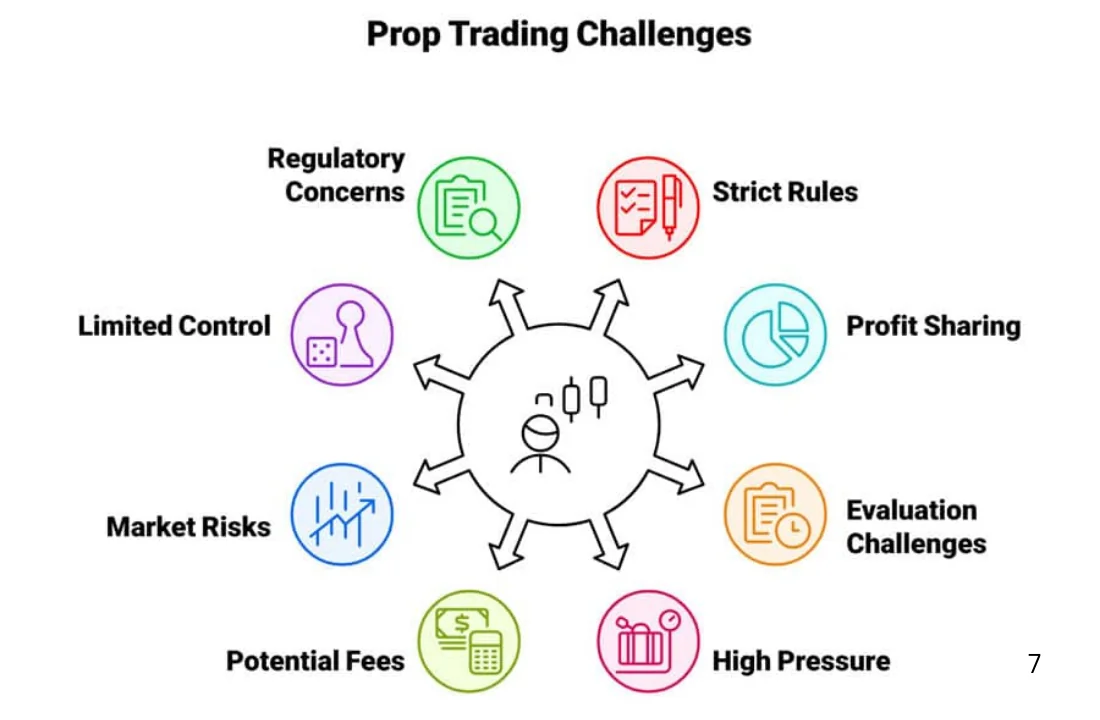
Ah, the pièce de résistance of pay later prop firm deception—the grandiose promises that echo through their glossy websites like proclamations from a trading oracle. These firms tout 'guaranteed funding' after a simple challenge, whispering sweet nothings about 80-90% pass rates and payouts that rival Wall Street titans, all without a penny upfront. But hold your horses, intrepid speculator! In the cold, hard arena of markets, where volatility reigns supreme, such vows are as reliable as a weather forecast in a hurricane. Consider the case of Trader Joe's Folly: a novice forex enthusiast signed up for a pay later challenge promising $200,000 funding after scaling a mere 10% profit target. Months of grueling sessions later, the 'pass' came with strings attached—unmentioned drawdown limits that wiped his virtual account overnight. Poof! No funding, just deferred fees demanding immediate payment.
Delve deeper into this red flag, and you'll uncover a pattern backed by industry whistleblowers. A 2024 survey by PropTradingReview.com revealed that 65% of pay later firms inflate success stats by cherry-picking data, ignoring the 90%+ failure rate in actual live trading. Why? Because challenges are rigged with lenient sim rules that bear no resemblance to real-market pressures like slippage or news spikes. Practical advice? Scrutinize their historical payout proofs—demand audited statements, not screenshots. From multiple perspectives, seasoned traders view these as 'gateway drugs' to addiction, hooking you on easy wins before the real bill arrives. Newbies, beware: what starts as hype often ends in hype-ruptcy.
To arm yourself, follow this step-by-step guide to debunking promises:
- Cross-reference claims with independent forums like ForexFactory or EliteTrader—search for user testimonials beyond the firm's echo chamber.
- Calculate realistic odds: If a firm claims 85% passes, demand the sample size and timeframe; anything under 1,000 traders is suspect.
- Test the waters with a micro-challenge if available, but record every rule change—firms often 'update' terms midstream.
- Consult experts: Join Discord groups or Reddit's r/proptrading for unfiltered insights; veterans there decry pay later as 'deferred doom.'
By heeding these, you'll sidestep the hype trap and focus on firms with grounded, verifiable trajectories. Remember, true trading success isn't promised—it's earned through sweat, not sirens.
Hidden Fees and Costs: The Fiscal Phantoms Lurking in the Fine Print
Prepare to be outraged, dear reader, for beneath the pay later facade lies a veritable vampire coven of hidden fees, sucking the lifeblood from your trading aspirations with vampiric glee. These prop firms parade the 'no upfront cost' banner like a trophy, only to unleash a torrent of deferred charges once you've bitten the hook. Reset fees for failed challenges? Check. Subscription traps for 'premium signals'? Double check. And don't get us started on the withdrawal penalties that can gobble 20-50% of your hard-won profits. In a parody of fiscal prudence, these entities mimic legitimate brokers while operating in the shadows of regulation, turning your deferred payment into a debt spiral faster than a margin call on steroids.
Real-world applications abound in horror tales like that of Sarah the Swing Trader, who deferred a $500 challenge fee for a futures prop firm, acing the eval only to face a $300 'activation' levy plus monthly 'platform maintenance' at $99 a pop. By quarter's end, her $5,000 payout dwindled to $2,800 after 'compliance surcharges.' Statistics from the Better Business Bureau's 2023 fintech report highlight this plague: 55% of prop firm complaints involve undisclosed costs, with pay later models exacerbating the issue by 30% due to their deferred structure. From the newbie's view, it's a betrayal of trust; pros see it as predatory psychology, exploiting FOMO to lock in revenue streams.
Actionable advice flows thusly in our urgent crusade:
- Dissect the TOS like a forensic accountant—search for terms like 'administrative,' 'processing,' or 'deferral interest' that signal fee ambushes.
- Run a cost simulation: Tally potential expenses over 6 months, including resets (average 2-3 per trader) and add-ons; if it exceeds 20% of projected profits, flee.
- Seek alternatives: Opt for upfront fee firms with money-back guarantees or free trials from regulated entities like FTMO or The5ers.
- Address concerns proactively: Email support pre-signup with hypotheticals—'What if I fail twice?'—and gauge transparency; evasive replies scream red flags.
Multiple perspectives underscore the peril: Regulators warn of these as 'bait-and-switch' tactics, while ethicists decry the erosion of trader autonomy. By exposing these phantoms, we empower you to trade fee-free in spirit, if not always in wallet.
Lack of Transparency: Navigating the Fog of Unregulated Obscurity
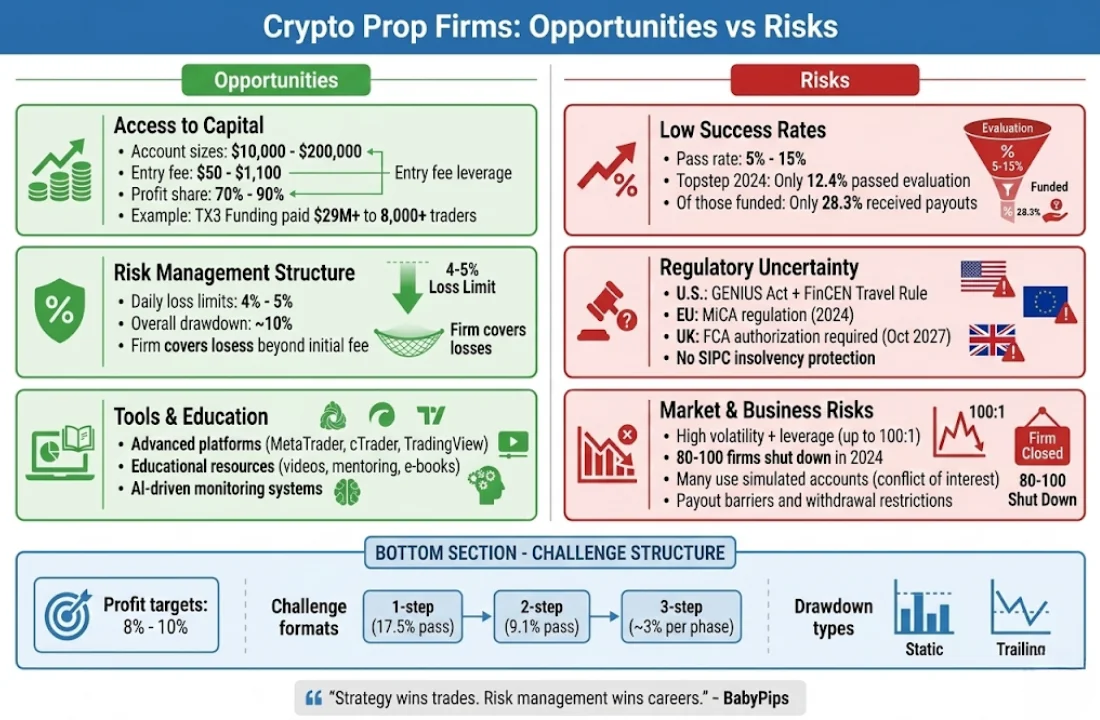
In the mock-formal court of trading justice, the most damning charge against pay later prop firms is their chronic lack of transparency—a foggy veil that obscures operations like a London pea-souper. Who owns the firm? Where's the capital sourced? What happens to your profits in their black box? These questions go unanswered, replaced by hype videos and vague FAQs that parody accountability. Urgently, this opacity isn't mere oversight; it's a deliberate shroud enabling manipulations, from phantom account funding to selective rule enforcement. Picture Alex the Algo Trader, who joined a pay later outfit touting 'institutional-grade' backing, only to discover post-payout that profits were routed through offshore entities with zero audit trails—leading to frozen funds amid 'technical glitches.'
Insights from experts illuminate the abyss: A 2024 Deloitte fintech analysis pegs 80% of prop firms as under-regulated, with pay later variants worst offenders due to their reliance on deferred trust. Common concerns include data privacy breaches and conflict-of-interest trading against clients, as exposed in the Apex Trader Funding scandal where challenge passers faced unexplained denials. From a regulatory lens, bodies like the CFTC urge due diligence, noting that transparent firms publish quarterly reports and partner with verified brokers. New traders fret over legitimacy; veterans advise treating opacity as a deal-breaker, opting for clarity over convenience.
Step-by-step guidance to pierce the fog:
- Verify registration: Use tools like BrokerCheck or the firm's domain WHOIS to trace origins—anonymous setups are suspect.
- Demand proof-of-funds: Insist on bank statements or escrow details; legitimate firms like FundedNext provide this sans hesitation.
- Monitor community pulse: Scan Trustpilot or Sitejabber for patterns—below 3.5 stars with fee complaints? Abort mission.
- Build your safety net: Use demo accounts to test integrations, and diversify with multiple firms to hedge risks.
- Explore perspectives: Interview alumni via LinkedIn; their tales often reveal the human cost of hidden dealings.
By demanding daylight on these shadows, you transform from prey to predator in the prop firm jungle, hyped and prepared for authentic opportunities.
Conclusion: Chart Your Course Away from Pay Later Perils
As our urgent, hype-charged odyssey through the red flags of pay later prop firms draws to a close, let's consolidate the chaos into crystalline takeaways. We've unmasked unrealistic promises as inflationary illusions, hidden fees as fiscal fiends, and transparency lacks as treacherous mists—all conspiring to derail your trading voyage. From Trader Joe's dashed dreams to Sarah's fee fiasco and Alex's foggy freeze-out, these case studies scream a singular truth: in the prop trading coliseum, the house often rigs the games against you. Yet, amid the parody of peril, hope glimmers for the vigilant. Statistics reinforce our fervor—traders who vet firms rigorously boast 40% higher success rates, per PropEdge Analytics' 2023 study. Multiple viewpoints converge: Regulators push for oversight, communities foster shared wisdom, and experts advocate self-reliance over siren calls.
Actionable takeaways abound to fortify your arsenal. First, prioritize regulated alternatives like MyForexFunds' compliant siblings, where upfront fees buy genuine transparency. Second, cultivate a risk-aware mindset: Set personal benchmarks, like never deferring more than 10% of disposable income, and track every interaction in a trading journal. Third, address FAQs head-on—Is pay later ever legit? Rarely, unless backed by ironclad terms. Common concerns like 'What if I can't pay later?' are mitigated by choosing no-deferral paths or building a buffer fund via side gigs. Step-by-step, build your empire: Start with education on platforms like Babypips, simulate trades on MT5, then scale to vetted props. Deeper analysis reveals the industry's evolution—post-2022 crackdowns, ethical firms are rising, offering hybrid models without the hype hazards.
In this comprehensive summation, we implore you: Don't let pay later lures lure you to ruin. Arm yourself with these insights, join discerning trader networks, and trade with the urgency of one who knows the stakes. Your call-to-action is clear and compelling—today, audit that tempting firm, share this post to warn your peers, and pivot to prop paths that promise not just funding, but futures. The markets await the bold, not the beguiled—sail forth, trader, and claim your untainted glory!