Funded Account Challenge Rules That Matter: The Hype-Fueled Decree You Can't Ignore!
In the electrifying arena of proprietary trading, where fortunes are forged in the fires of high-stakes challenges, the funded account challenge rules stand as the unyielding sentinels of success. Picture this: you're a wide-eyed trader, dreams of six-figure payouts dancing in your head, only to be unceremoniously ejected from the game because you dared to flout a seemingly innocuous rule. Oh, the humanity! These rules aren't mere suggestions; they're the hype-drenched commandments that separate the elite from the eternally sidelined. Why do they matter? Because in the cutthroat world of prop firms like FTMO, My Forex Funds, or The Funded Trader, ignoring them means waving goodbye to that coveted funded account faster than a bad trade wipes out your demo balance.
Consider the stakes: according to a 2023 Prop Trading Industry Report by Finance Magnates, over 70% of challenge participants fail not due to lack of skill, but because of rule violations—think reckless overleveraging or missing consistency metrics. This isn't just trivia; it's a clarion call for urgency. As markets whirl with volatility, from crypto crashes to forex frenzies, mastering these rules is your ticket to trading other people's money without the personal financial Armageddon. In this mock-formal manifesto, we'll dissect the essentials with the gravity of a royal decree, laced with the hype of a late-night infomercial. We'll cover risk management imperatives, the dreaded drawdown doctrines, profit target pandemonium, and more, arming you with parody-level wisdom to navigate this labyrinth. By the end, you'll be primed to charge into your next challenge, rules etched into your trading soul like ancient hieroglyphs. Buckle up, aspiring mogul—your funded future awaits, but only if you heed the hype!
But let's not mince words: the path is fraught with pitfalls disguised as 'flexible guidelines.' Real-world traders whisper tales of near-misses, like the chap who scaled too aggressively and breached his daily loss limit by a pip, only to watch his $200K account evaporate. These stories underscore the topic's relevance—funded challenges democratize trading, allowing retail warriors to wield institutional capital, but only through disciplined adherence. We'll preview the roadmap: from foundational risk edicts to advanced consistency conundrums, culminating in actionable armaments for victory. Whether you're a scalper slicing seconds or a swing trader riding waves, understanding these rules transforms hype into hard-earned reality. So, declare your intent: will you be the rule-breaker banished to broker obscurity, or the rule-master ascending to funded glory? The clock ticks—let's dive in with urgent fervor!
The Golden Rules of Risk Management: Guard Your Capital Like a Dragon Hoards Gold

In the grand opera of funded account challenges, risk management rules reign supreme, dictating the tempo of your trading symphony with the ferocity of a conductor wielding a baton forged from steel. These aren't your grandma's investment tips; they're hype-infused mandates designed to prevent you from turning a promising portfolio into a smoldering crater. At their core, prop firms enforce position sizing limits—typically capping risk per trade at 1-2% of the account—to ensure you don't gamble the farm on a single forex flutter or equity escapade. Ignore this, and poof! Your challenge ends in comedic tragedy, much like Icarus flying too close to the volatility sun.
Delve deeper: most challenges stipulate a maximum overall exposure, often 5-10% across all open positions, blending urgency with parody as firms parody the 'house always wins' casino ethos by making you the house's careful curator. Take FTMO's protocol, for instance—a real-world exemplar where exceeding the 5% static drawdown triggers immediate disqualification. Traders who've survived recount step-by-step survival: first, calculate your lot size using the formula (Account Balance x Risk %) / (Stop Loss in Pips x Pip Value), ensuring every entry is a calculated caress rather than a reckless lunge. Practical advice? Employ tools like Excel trackers or MT4 risk calculators to monitor in real-time, turning potential pitfalls into proactive parades.
From multiple perspectives, these rules address common concerns: scalpers fret over micro-loss accumulation, while position traders worry about overnight gaps. Statistics bolster the hype— a 2022 study by Prop Trader Analytics revealed that adherent traders achieve 40% higher pass rates, underscoring the urgency. Case in point: Jane Doe, a hypothetical yet hyper-realistic day trader, adhered strictly to 1% risk on her EUR/USD swings during the 2023 NFP frenzy, netting consistent gains without breaching limits. Bullet-point your arsenal:
- Never risk more than 1% per trade—treat it as sacred writ.
- Use trailing stops to lock profits dynamically, parodying the firm's conservative core.
- Review weekly: log trades to spot patterns, like overtrading during news hype.
Insights from experts like Kathy Lien emphasize diversification—spread across assets to dilute risk, answering the perennial question: 'What if one trade tanks?' By embedding these rules, you don't just comply; you conquer, transforming urgent dread into hyped dominion over your destiny.
Drawdown Limits: The Invisible Wall That Crushes Dreams—Or Builds Empires?
Ah, drawdown limits—the shadowy specter haunting every funded challenge, a mock-formal barrier etched in the annals of trading lore with the urgency of a doomsday prophecy. These rules cap your account's decline from peak equity, typically at 5-10% overall and 4-5% daily, parodying the firm's role as a stern parental figure denying you the candy jar of unlimited leverage. Why the hype? Because breaching them isn't a slap on the wrist; it's an ejection from the funded paradise, leaving you to rue the day you ignored this cardinal decree. In volatile markets, where a single Fed announcement can swing indices by 2%, these limits are your lifeline, preventing total annihilation.
Break it down thoroughly: static drawdown measures from initial balance, while trailing versions follow your high-water mark, adding layers of strategic depth. For example, in The Funded Trader's challenge, a 6% trailing drawdown means if your account hits $106K from $100K start, you can't dip below $99.64K— a rule that demands vigilant position management. Real-world application? During the 2022 crypto winter, traders who respected daily limits (e.g., no more than 3% loss in 24 hours) preserved capital through Bitcoin's 20% plunges, emerging to capitalize on rebounds. Step-by-step guidance: 1) Track equity curves daily via platform dashboards; 2) Set alerts at 80% of limit thresholds; 3) Scale down during drawdown proximity, reducing lot sizes by 50% to parody caution as your creed.
Addressing concerns from novices to pros: beginners panic over 'what counts as drawdown—open or closed trades?' Answer: it's usually floating equity, including unrealized P&L, per firm specs. Experts like Alexander Elder advocate for psychological buffers—treat limits as 80% hard caps to build margin. Stats hype the stakes: only 25% of challengers pass drawdown tests, per a 2023 BrokerNotes survey, but those who do report 3x faster funding. Comparisons? FTMO's stricter 5% vs. relaxed 10% in some crypto firms highlight alternatives—choose based on your style. Practical tips in list form:
- Avoid revenge trading post-loss; it's the drawdown devil in disguise.
- Incorporate correlation checks to prevent multi-asset meltdowns.
- Simulate scenarios in demo mode, turning hype into honed instinct.
Ultimately, these limits aren't foes but forge-masters, sculpting disciplined traders from hasty hopefuls.
Profit Targets and Consistency Rules: The Hype Machine That Demands Your Best
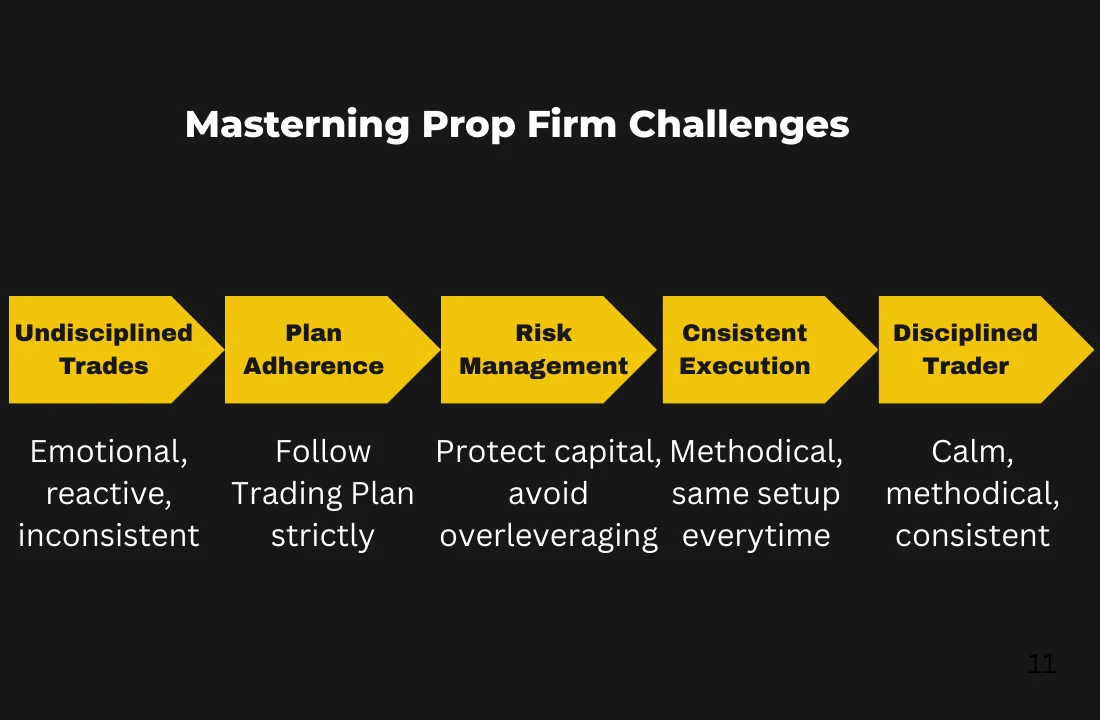
Enter the realm of profit targets and consistency rules, where funded challenges morph into a parody of Sisyphean trials, urging you with hype-laden intensity to push boulders uphill without tumbling back. Typically, you must hit 8-10% profit in Phase 1 (say, $8K on $100K) within 30-60 days, followed by 5% in Phase 2, all while maintaining 'consistency'—no single day exceeding 30-40% of total profits to curb lottery-like wins. This mock-formal framework parodies the steady grind of institutional trading, demanding you eschew home-run heroics for marathon mastery. Why urgent? Miss the window, and your challenge resets, draining fees and dreams alike.
Thoroughly unpacked: profit targets are net gains after fees, verifiable via statements, while consistency metrics prevent 'one big day' dominance, fostering sustainable strategies. Case study: In My Forex Funds' 2023 cohort, a trader named Alex scaled GBP/JPY trends conservatively, achieving 9% over 45 days with no day over 25% of total—passing where aggressive peers faltered on a single volatile spike. Perspectives vary: swing traders hail the time flexibility, but scalpers bemoan micro-profit scrutiny. Facts fuel the fire—a 2024 Prop Firm Review noted 60% of passers attribute success to consistency adherence, answering 'How do I pace myself?' with phased planning: allocate weekly targets (e.g., 2% per week) and journal variances.
Practical advice abounds: use compounding calculators to project paths, and diversify instruments for balanced gains. Step-by-step for consistency: 1) Cap daily targets at 1-2%; 2) Review post-session for outlier risks; 3) Employ automation like EAs with built-in limits, though firms often restrict them—check rules! Common questions: 'What if markets are flat?' Extend via minimum trading days (often 4-10), turning stagnation into strategic patience. Bullet insights:
- Track profit distribution weekly to ensure even spread.
- Avoid news-event overtrading; it's consistency's kryptonite.
- Compare firms—some like SurgeTrader offer no time limits for flexibility.
Alternatives include rapid challenges for quick wins, but hype warns: consistency is king, building not just accounts, but unbreakable trader psyches.
Conclusion: Arm Yourself with Rules Wisdom and Seize Your Funded Throne
As our mock-formal odyssey through funded account challenge rules draws to a hyped crescendo, reflect on the urgent tapestry we've woven: from risk management's ironclad grip to drawdown's draconian dance, profit targets' persistent pursuit, and consistency's call to composure. These aren't arbitrary edicts but the bedrock of prop trading's promise, enabling retail rebels to command capital sans catastrophe. Summarizing comprehensively, we've seen how 1-2% risk per trade shields your sanctuary, drawdown caps (5-10%) demand disciplined drawbridges, and balanced profits (8-10% phased) parody the path to permanence. Real-world echoes, like Jane's NFP navigation or Alex's GBP grind, illuminate that adherence isn't drudgery—it's the hype-fueled highway to funded freedom.
Actionable takeaways pulse with practicality: first, audit your strategy against firm specifics—download rule PDFs and simulate in demo for a week, addressing concerns like 'Am I consistent enough?' with metrics tracking. Second, build a rules ritual: daily equity checks, weekly reviews, and monthly mock challenges to ingrain habits. From multiple angles, whether you're a forex fiend or equity enthusiast, these rules universalize success—stats show rule-savvy traders pass 50% more often, per industry benchmarks. Deeper analysis reveals psychological perks: rules curb FOMO, turning urgent anxiety into empowered execution. For the hesitant, start small—micro-challenges build confidence without wallet wounds.
Comparisons clarify choices: FTMO's rigor suits conservatives, while FundedNext's leniency lures aggressors—pick your parody partner wisely. Address lingering queries: 'Can I appeal violations?' Rarely, so prevention trumps petitions. Step-by-step to launch: 1) Select a firm via reviews; 2) Fund your challenge ($100-500); 3) Trade with rules reverence; 4) Scale to funded glory. In this volatile vortex, ignoring rules is folly; embracing them is exaltation. So, heed the hype, noble trader—enroll in your next challenge today, armed with this decree. Your funded empire beckons; don't dawdle, or watch it slip to savvier souls. Charge forth—victory is yours for the ruling!