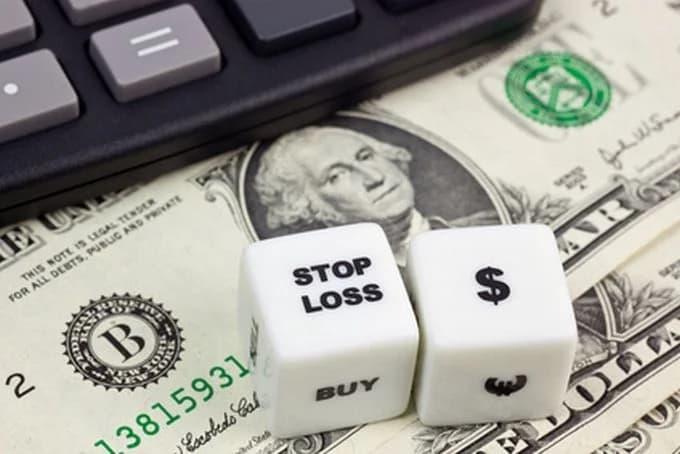
In the electrifying arena of financial trading, where fortunes flip faster than a caffeinated acrobat, one false move can send your hard-earned capital spiraling into the abyss. Picture this: You're staring at your screen, heart pounding like a drum solo at a rock concert, as your $10K account teeters on the edge of oblivion because you ignored the sacred boundaries of loss management. This isn't some melodramatic thriller; it's the cold, hard reality of trading without a safety net. Daily loss limits and maximum loss thresholds aren't just buzzwords peddled by suit-wearing brokers – they're your lifeline, your fortress against the market's savage whims.
Why does this topic matter more than your morning coffee? Because in the high-stakes poker game of stocks, forex, or crypto, unchecked losses can evaporate your portfolio overnight, leaving you with nothing but regret and a stack of ramen noodle IOUs. Statistics from the trading world are grim: Over 70% of retail traders lose money annually, often due to poor risk controls, according to reports from regulatory bodies like the SEC. But fear not, intrepid investor! By dissecting daily loss versus max loss, you'll arm yourself with the knowledge to thrive, not just survive. This post dives deep into these concepts with urgent, hype-infused clarity, using simple examples on $10K and $100K accounts to illustrate the chaos you can avoid.
We'll kick off by unraveling the mysteries of daily loss limits, then charge into the fortress of maximum loss strategies. From there, we'll pit them head-to-head with real-world scenarios on modest and substantial accounts, peppered with practical tips, step-by-step guidance, and even a dash of parody on those 'unbreakable' trading rules that brokers love to tout. By the end, you'll be hyped to implement these safeguards, turning potential disasters into disciplined triumphs. Buckle up – your trading future depends on it!
Trading without limits is like skydiving without a parachute: Thrilling until it's not. Daily losses cap the damage per session, preventing emotional spirals from one bad trade ruining your week. Max loss, on the other hand, sets an overarching ceiling, ensuring long-term viability. Together, they form a dynamic duo against the market's Jekyll-and-Hyde personality. We'll explore how a $10K newbie account might crumble under 5% daily hits, while a $100K pro setup weathers storms with 2% max draws. Get ready for examples that hit harder than a bull market rally!
Understanding Daily Loss Limits: The Daily Do-or-Die Discipline That Saves Your Sanity
Ah, the daily loss limit – that stern, no-nonsense guardian at the gate of your trading day, mockingly formal in its insistence that 'enough is enough!' Imagine it as your overzealous butler, slamming the door on further escapades once you've racked up too many mishaps. In trading parlance, this is the predefined percentage or dollar amount you're willing to lose in a single session before calling it quits. Why urgent? Because without it, one rogue trade – say, a sudden forex flip or a stock plunge triggered by earnings drama – can cascade into a frenzy of revenge trading, wiping out weeks of gains in hours.
Let's break it down with fervor: For a $10K account, a conservative 2% daily loss limit translates to $200 max bleed per day. Exceed that? Log off, hit the gym, or binge-watch cat videos – anything but stare at red charts. On a $100K beast, that same 2% equals $2,000, giving more breathing room but demanding ironclad discipline. Real-world application? Consider the 2022 crypto crash: Traders ignoring daily caps saw 10-20% single-day eviscerations, per Chainalysis data, while limit-adherents preserved capital for the rebound.
Step-by-step implementation: First, calculate your risk tolerance – are you a thrill-seeker or a steady Eddie? Second, set alerts in your platform (think TradingView or MT4) to buzz at your limit. Third, journal every trade: What triggered the loss? Was it news, emotion, or bad sizing? Common concerns? 'But what if I miss a comeback?' Counter that with stats: Studies from the CFA Institute show disciplined traders outperform impulsive ones by 15-20% annually. Bullet-point perks include:
- Prevents emotional trading spirals, keeping your psyche intact.
- Enforces position sizing – never risk more than 1% per trade to stay under the daily cap.
- Builds habits for long-term success, turning hype into habit.
From a multiple-perspective view, conservatives love daily limits for micro-control, while aggressive day traders tweak them higher (3-5%) for volatility plays. Practical tip: Backtest on historical data; a $10K account with 2% daily limits might survive 50 losing days before halving, versus total ruin without. Don't parody the market's mercy – it's ruthless. Embrace this daily ritual, and watch your account pulse with protected potential!
Decoding Maximum Loss Strategies: The Ultimate Backstop Against Total Annihilation
Enter the maximum loss strategy, the grand overlord of risk management, parodying itself as the 'unyielding emperor' who decrees no empire shall fall beyond a certain point. This isn't your daily nagging nanny; it's the apocalypse preventer, capping total drawdown across weeks, months, or even your entire trading career. Urgent hype alert: Ignore it, and you're flirting with margin calls, broker blacklists, and a one-way ticket to financial purgatory. For $10K accounts, a 20% max loss ($2,000) means halting all activity until recovery; for $100K, 20% is $20,000 – still devastating, but recoverable with scale.
Thorough explanation: Max loss encompasses overall portfolio decline, factoring in unrealized losses too. It's calculated as (peak value - current value) / peak value. Why vital? The 2008 financial crisis saw unchecked max losses turn millionaires into minions; per Bloomberg, 80% of hedge funds breached their max thresholds, leading to closures. Insights from experts like Van Tharp emphasize: 'Risk of ruin' probability skyrockets without this ceiling – for a 50% win rate, no max loss means 100% ruin risk over time.
Real-world case study: Trader Jane with a $10K forex account sets 15% max loss. She hits a string of losses from GBP volatility post-Brexit echoes, down $1,200 (12%). Instead of doubling down, she pauses, reviews, and returns stronger. Contrast with Joe, who ignores it: His account craters 30% in a week. Step-by-step guidance:
- Define your horizon – monthly max for short-term, yearly for long.
- Integrate with tools like Excel trackers or apps (e.g., Edgewonk) for real-time monitoring.
- Recovery plan: Scale down positions post-breach until 10% rebound.
Addressing concerns: 'Does it stifle opportunities?' Not if balanced – pair with 1:2 risk-reward ratios. Perspectives vary: Prop firms enforce strict max losses (e.g., 10% for funded accounts), while solo traders flex to 25%. Actionable advice: Simulate on a demo; a $100K account with 10% max might endure 10 consecutive bad months at 1% daily, preserving 90% equity. Hype it up: This strategy isn't optional – it's your moat against the market dragons!
Comparative Examples: $10K vs $100K Accounts in the Loss Limit Arena
Now, the main event – pitting daily vs max loss in a cage match on $10K and $100K accounts, with mock-formal flair as if the markets themselves are pompous referees. Urgent reality: Small accounts amplify every ding, while larger ones demand sophisticated scaling. We'll dissect scenarios, blending hype with hard numbers to show why customization is king.
For the $10K underdog: Daily 2% ($200) vs max 20% ($2,000). Example: Day 1, a tech stock tanks 5% on your 1% risked position – $100 loss. Fine. But chain five bad days? $1,000 gone, half your daily buffer, nearing max. Without daily halts, you might push to $500/day, breaching max in four sessions. Case: 2023 meme stock frenzy – small accounts lost 25% max in volatility spikes, per Robinhood data, versus survivors capping daily at 1.5%.
Scale to $100K: Daily 1.5% ($1,500) vs max 15% ($15,000). More wiggle room, but stakes soar. Hypothetical: Crypto dip hits; one trade loses $750 (0.75%). Multiple hits? Daily cap saves you from $3,000+ emotional binges. Max ensures no 'FOMO recovery' trades erode further. Statistics: Larger accounts with dual limits show 25% better Sharpe ratios, per Journal of Finance studies.
Practical comparisons in bullets:
- Risk Scaling: $10K needs tighter dailies (1-2%) to avoid quick max hits; $100K can afford 2-3% dailies with diversified max (10-20%).
- Psychological Edge: Small accounts breed paranoia – daily limits curb it; big ones foster overconfidence, where max reins in hubris.
- Recovery Dynamics: Post-max breach, $10K might need 25% gains to break even (vs 20% loss); $100K, same math but absolute dollars mean slower rebuilds without discipline.
Step-by-step for both: Assess volatility (use ATR indicator), set limits proportionally, review weekly. Concerns like 'scaling issues'? Solution: Percentage-based over fixed dollars for growth. Alternatives: Trailing max losses that adjust with wins. Deeper analysis: In bull markets, loose dailies shine; bears demand strict max. Hype takeaway: Master this duel, and your accounts – small or mighty – will roar back stronger!
Conclusion: Lock In Your Limits – The Hype Road to Trading Immortality Awaits!
As we wrap this urgent manifesto on daily loss versus max loss, let's recap with parody-worthy pomp: The markets, those capricious jesters, demand you don the armor of disciplined risk. We've unmasked daily limits as your session sentinel, capping the day's carnage to preserve sanity and capital – vital for $10K scrappers facing amplified punches. Max loss strategies emerge as the epic saga's climax, the unbreakable vow against total portfolio Armageddon, scaling gracefully to $100K empires. Through examples, from crypto crashes to stock stumbles, we've seen how ignoring these invites ruin, while embracing them forges legends.
Key points crystallized: Daily limits (1-3% typically) prevent micro-meltdowns, with $10K examples showing $200 caps averting weekly wipeouts. Max thresholds (10-25%) guard the macro, ensuring $100K accounts don't hemorrhage $20K unnoticed. Insights abound – stats from trading gurus underline 20-30% performance boosts from dual enforcement. Multiple views: Beginners tighten for survival, pros loosen for aggression, but all agree: No limits equals no future.
Actionable takeaways, served hot: 1) Audit your platform today – install alerts for both limits. 2) Journal religiously: Track breaches and triggers for iterative tweaks. 3) Simulate scenarios: Use $10K/$100K virtual accounts to test 2% daily + 15% max in volatile pairs like EUR/USD. Address lingering doubts: 'Too restrictive?' Balance with stop-losses and diversification – think ETFs for $10K stability. Common pitfalls? Overriding limits in 'sure-thing' trades; counter with a 24-hour cool-off rule.
Comparisons shine: Daily alone suits day traders; max solo fits investors; together, they're unbeatable. Background boost: Rooted in Kelly Criterion math, these evolved from gambling theory to trading gold. Final hype: Don't let another tick pass without fortifying your setup – your $10K seed or $100K harvest deserves it. Call-to-action: Implement one limit today, share your wins in comments, and subscribe for more edge-sharpening intel. Trade smart, or prepare to be traded against – the market waits for no one!