Introduction: The Urgent Call to Arms for Aspiring Trading Titans
Oh, dear reader, picture this: You're lounging in your pajamas, sipping lukewarm coffee, when suddenly—bam!—a notification pings on your phone. It's not your boss nagging about TPS reports; it's your prop firm account alerting you to a seven-figure profit from a trade you placed while binge-watching cat videos. Sounds like a fever dream? Well, buckle up, because funded trading is the rocket fuel that's propelling ordinary folks like you into the stratosphere of financial glory, and the best part? It requires shockingly minimal capital to get started. But wait, don't pop the champagne just yet; in this mock-formal exposé, we're ripping the veil off the so-called 'capital requirements' that have been gatekeeping the markets for far too long.
Why does this topic matter with such frantic urgency? In a world where traditional trading demands you mortgage your soul (or at least your grandma's antique brooch) to scrape together tens of thousands for a margin account, funded trading flips the script. Prop firms—those benevolent behemoths of the brokerage world—hand you their money to trade, taking a cut of the wins while you bask in the glory of leveraged largesse. It's not just a side hustle; it's a hype-fueled highway to wealth that democratizes the markets, allowing even the most cash-strapped dreamer to compete with Wall Street wolves. Yet, the devil's in the details: What exactly is the minimum cost to breach these ivory towers? Misstep here, and you'll be left holding an empty wallet and a participation trophy.
This comprehensive guide, delivered with the gravitas of a Victorian economist parodying modern greed, will dissect the essentials. We'll plunge into the what and why of funded trading, unravel the capital conundrum with real numbers and riotous examples, compare top prop firms in a no-holds-barred showdown, and arm you with actionable advice to launch your empire. By the end, you'll be foaming at the mouth to sign up, because in the cutthroat arena of trading, hesitation is for losers—and we're here to crown you king (or queen) of the charts. So, sharpen your pencils, or better yet, your trading algorithms, and let's dive into this urgent odyssey before the markets eat your lunch.
Funded trading isn't some elusive unicorn; it's a tangible path trodden by thousands who've turned pocket change into fortunes. Consider the case of Jamie, a barista from Seattle who, with a mere $200 evaluation fee, aced a prop firm's challenge and now trades a $100,000 funded account from her studio apartment. Stories like hers abound, but they're drowned out by the hype of get-rich-quick scams. We'll cut through the noise, explaining how these programs work: You pay a small fee to prove your mettle in a simulated challenge, and if you hit profit targets without imploding the account, voilà—funded status! This matters because traditional brokers demand 5-10% of your trade value as margin, often requiring $25,000+ just to day trade without restrictions. Prop firms? They laugh in the face of such barriers, offering up to 90% profit splits and scaling to millions. But urgency calls: With crypto volatility and stock surges, now's the time to act, or watch competitors surge ahead. Previewing our journey: We'll demystify the basics, break down costs with examples, roast the firms, and conclude with your battle plan. Prepare for enlightenment—and perhaps a little laughter at the absurdity of it all.
What is Funded Trading? A Parodic Primer on Prop Firm Philanthropy
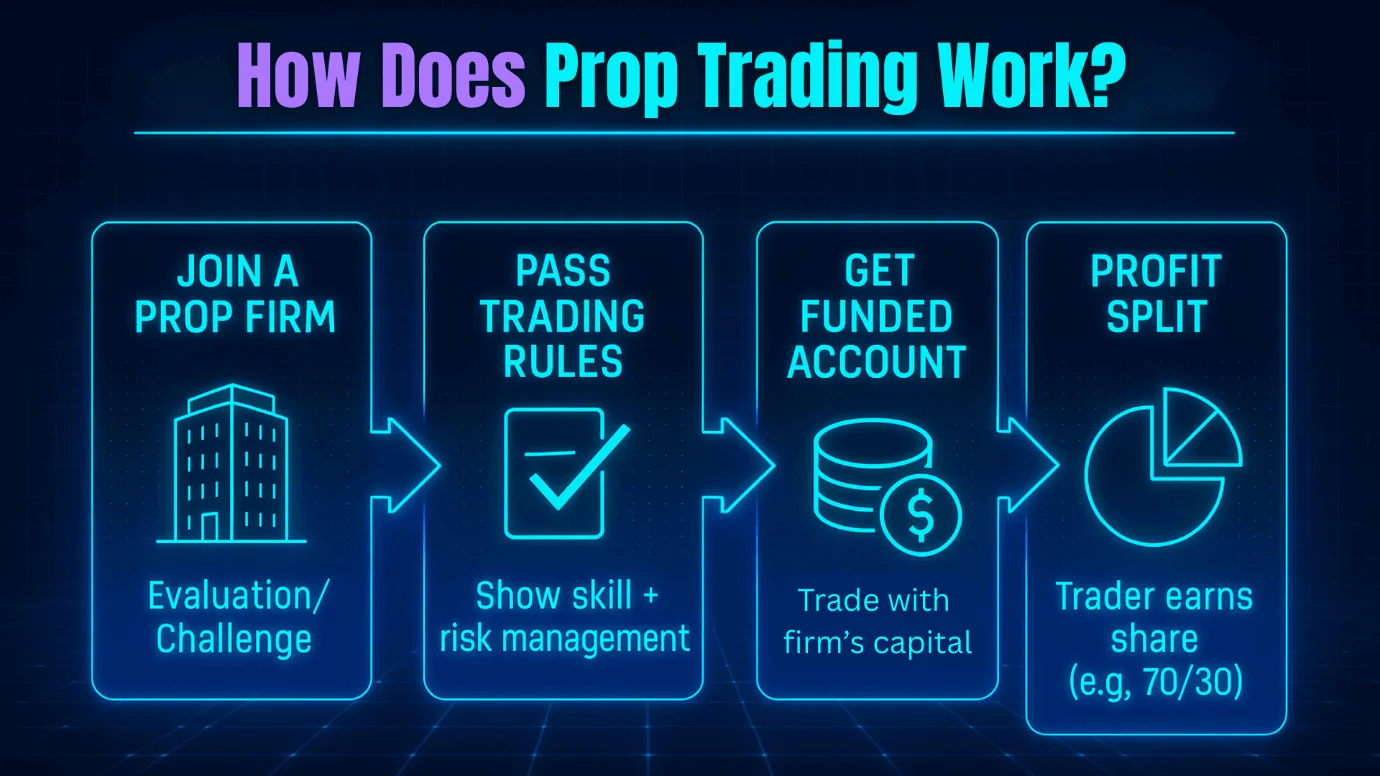
Esteemed reader, in the grand theater of finance, funded trading emerges as the plucky underdog hero, mocking the pompous brokers who hoard capital like dragons guard gold. At its core, funded trading—courtesy of proprietary (prop) firms—is a symbiotic pact where the firm provides the trading capital, and you, the intrepid trader, wield it like Excalibur to slay market beasts. No need to liquidate your 401(k) or pawn your family heirlooms; instead, you pay a modest evaluation fee to demonstrate your prowess in a risk-free simulation. Succeed, and the firm funds you with real (or simulated-to-real) money, often $50,000 to $500,000, taking 10-20% of profits as their 'generous' tribute. It's hype incarnate: Leverage without liability, turning a $100 fee into access to fortunes.
Why the urgency? Traditional trading is a capital-intensive slog—think $30,000 minimum for pattern day traders under FINRA rules—while prop firms parody this by shifting risk to themselves. They profit from your success (and volume), creating a win-win that's exploded in popularity post-2020, with the industry valued at over $1 billion by 2023, per industry reports. Take FTMO, a Czech powerhouse: Traders pass a two-phase challenge, trading virtual funds with rules like 10% max drawdown. Pass? Get 80% of profits on a live account. Real-world application: During the 2022 meme stock frenzy, a prop trader scaled from $10,000 challenge to $200,000 funded, netting $50,000 in months—without initial capital beyond the fee.
Delving deeper, funded accounts come in flavors: Static (fixed size) vs. scaling (grow with performance). Perspectives vary: Skeptics decry it as 'pay-to-play' gambling, but proponents highlight education—many firms offer webinars, psychology coaching. Common concerns? Overleveraging leading to failures (80% challenge fail rate, per prop stats). Practical advice: Start with micro-challenges ($5,000 accounts) to build skills. Step-by-step: 1) Research firm rules (profit targets 8-10%, daily loss limits 5%). 2) Practice on demo accounts. 3) Pay fee (avg. $100-500). 4) Trade conservatively. Example: Sarah, a nurse, invested $150 in MyForexFunds, passed via disciplined scalping, and now trades full-time. Hype alert: This isn't charity; it's capitalism's clever twist, but urgency demands action—markets wait for no one.
Insights from experts like Alexander Elder (author of Trading for a Living) echo: Prop firms lower barriers, fostering discipline over deep pockets. Stats: Over 100,000 active prop traders globally (2023 data), with 20% achieving funded status annually. Bullet points for clarity:
- Pros: Minimal upfront capital, risk-free learning, high leverage (up to 1:100).
- Cons: Strict rules, fee non-refundable, profit-sharing cuts.
- Tip: Track journals to avoid emotional trades—90% of failures stem from psychology, not strategy.
In this parody of finance's formality, funded trading is the jester crashing the king's feast, offering gold to the masses. But don't dawdle; enroll today and parody the paupers who cling to savings accounts.
Decoding the Capital Requirements: The Minimum Cost to Propel Your Portfolio
Ah, the pièce de résistance: Capital requirements in funded trading, that mock-serious ledger where dreams meet dollars. Spoiler: It's not the $100,000 war chest of yore; prop firms have parodied austerity by slashing entry to peanuts—often $50-500 for challenges granting access to $5,000-$250,000 accounts. Urgency surges here: With inflation gnawing at savings, why tie up capital when firms foot the bill? The 'minimum cost' is essentially the evaluation fee, non-refundable but dwarfed by potential returns. For instance, Apex Trader Funding charges $147 for a $50,000 futures account challenge—pass, and trade their money with 90% splits.
Thorough breakdown: Fees scale with account size. Small: $25,000 account might cost $100-200; large: $200,000 at $500+. No ongoing capital needed post-funding; just adhere to rules like 6% max drawdown. Real-world example: In 2023, during EUR/USD volatility, trader Mike paid $300 to Topstep, passed via trend-following, and withdrew $20,000 profits quarterly—ROI over 6,000%. Perspectives: Bulls say it's accessible; bears warn of 'paywall illusions' since failures mean lost fees. Stats: Average challenge fee $250 (Prop Firm Analytics, 2024), with 1:10 success amplifying to massive gains.
Practical advice abounds: Budget for multiple attempts (avg. 2-3 tries). Step-by-step guidance: 1) Assess risk tolerance—start small. 2) Fund via card/PayPal (instant). 3) Simulate first (free trials offered). 4) Monitor drawdowns religiously. Common questions: 'Is it real money?' Yes, post-challenge. 'Taxes?' Treat as business income. Case study: UK trader Lisa, facing job loss, invested $200 in FundedNext, aced with EA bots, scaled to $100,000 account, quitting her 9-5. Hype intensifies: This low barrier mocks elitism—anyone with Wi-Fi can join.
Deeper analysis: Hidden costs? Platform fees ($50/month sometimes), but offset by no commissions on funded trades. Comparisons: Forex props cheaper than futures (futures need exchange fees). Tips: Use promo codes for 20% off (e.g., Black Friday deals). Bullet insights:
- Forex Minimum: $100 for $10,000 account (e.g., FTMO).
- Futures: $130+ for $25,000 (NinjaTrader).
- Stocks: Rare, but $200 for $50,000 (SurgeTrader).
- Expert Tip: Focus on consistency; volatility kills 70% of challengers.
In this urgent parody, capital requirements are the emperor's new clothes—barely there, yet transformative. Seize it now, lest regret be your only asset.
Top Prop Firms Exposed: A Hype-Filled Comparison of Entry Costs and Catches
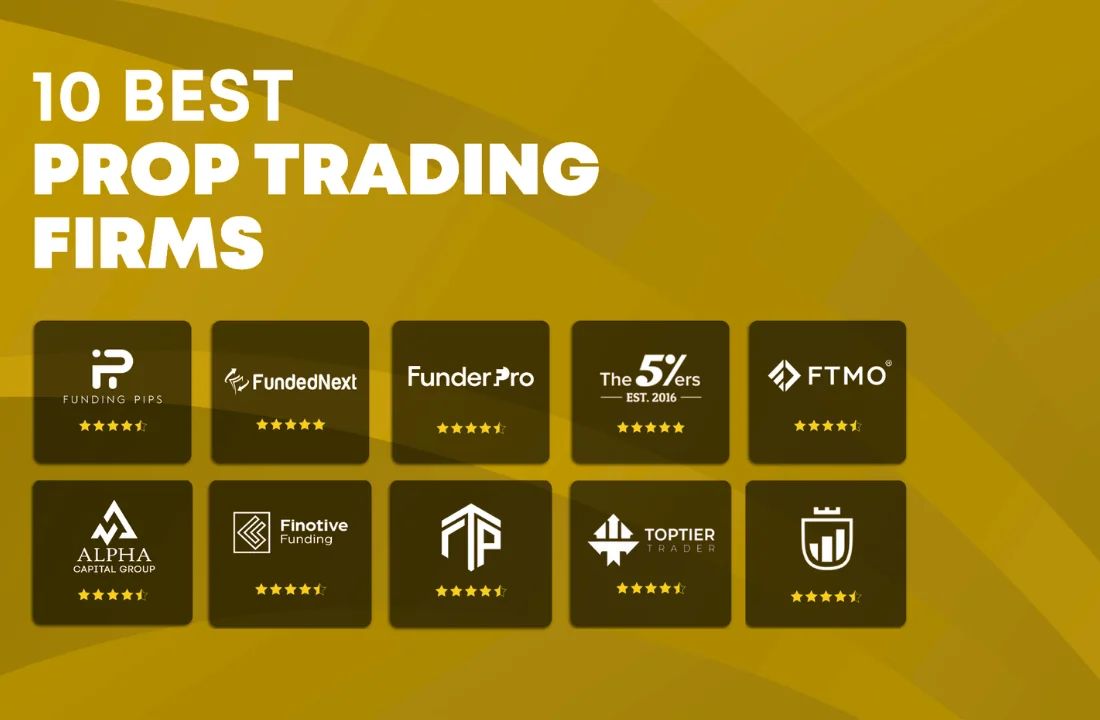
Behold, the gladiatorial arena of prop firms, where we parody the suits with a savage showdown of costs, perks, and pitfalls! Urgency alert: Choosing wrong means wasted fees; right, and you're trading like a hedge fund hotshot. We'll roast five titans: FTMO, Funded Trader, Apex, My Funded FX, and The5ers. Minimums hover $50-650, but details dazzle—or dismay.
FTMO: Czech elegance with $155 for $10,000 challenge. Pros: 80/20 split, MT4/5, education hub. Catch: Two-phase, 10% target. Example: Trader Alex cleared $15,000 funded in 2023 crypto boom. Funded Trader: US-based, $119 for $5,000. Hype: Instant funding options, 85% split. Pitfall: Higher drawdown (12%). Real app: During Fed hikes, a scalper netted $8,000 monthly.
Apex Trader: Futures focus, $167 for $100,000. Parody perk: No daily drawdown, scaling to $300,000. Stats: 15,000+ funded traders. My Funded FX: $199 for $50,000 forex. Urgent edge: Unlimited time, 90% split. Case: Aussie trader Ben passed post-three tries, trading AUD pairs for $30,000 annual. The5ers: $39 hyper-affordable for $5,000. Catch: Strict 6% loss. Perspectives: Newbies love low entry; pros seek scaling.
Comparative roast: FTMO wins education (webinars galore); Apex for futures freedom. Costs: Average $200, but The5ers undercuts at $39—hype for bootstrappers. Advice: Match style—forex? FTMO; futures? Apex. Step-by-step selection: 1) List needs (leverage, assets). 2) Check reviews (Trustpilot 4.5+). 3) Trial platforms. 4) Budget $300 initial. Common concern: Scams? Stick to regulated (e.g., FTMO CySEC). Tips: Use affiliates for bonuses. Numbered alternatives:
- Low-Cost Pick: The5ers—$39 entry, instant vibe.
- High-Split: Funded Trader—85%, but volatile rules.
- Scalable: Apex—grow fast, pay more upfront.
Insights: Industry growth 300% YoY (2023), but 75% fail challenges—practice! In this mock-formal melee, pick your champion and charge—markets reward the bold, not the broke.
Conclusion: Seize Your Funded Future Before the Bell Tolls!
As our parodic procession through funded trading concludes, let's recap with the urgency of a ticking doomsday clock: We've unmasked the myth of massive capital needs, revealing prop firms as the hilarious heroes offering entry for under $500, granting access to empires built on their dime. From the intro's hype hook—why this matters in a barrier-busting world—to decoding basics, minimum costs (fees as low as $39!), and firm face-offs, the truth is clear: Funded trading parodies elitism, empowering you with leverage, education, and profit potential sans personal peril. Remember Jamie's barista-to-boss saga, Mike's volatility victory, Lisa's life pivot? These aren't anomalies; they're blueprints for your breakout, backed by stats showing 20% success rates yielding life-changing ROIs.
Key takeaways, distilled for action: First, grasp funded trading's core—evaluation fees unlock simulated trials leading to real capital, mocking traditional $25k+ hurdles. Second, minimums vary: $100-500 averages, with forex cheapest, futures feistier. Third, compare firms ruthlessly—FTMO for finesse, The5ers for thrift—factoring splits (80-90%), rules (5-10% drawdowns), and scaling. Perspectives balanced: It's not free lunch (failures sting), but democratizes trading, addressing concerns like psychology via tips: Journal trades, start small, embrace discipline. Step-by-step launch: 1) Educate via free resources. 2) Select firm matching assets. 3) Pay fee, practice relentlessly. 4) Pass, trade, withdraw (often monthly). Deeper advice: Diversify challenges across firms; use bonuses to cut costs 20%. Common pitfalls? Rushing without backtesting—avoid, or join the 80% failure club.
Actionable urgings: Don't let FOMO fester—sign up today! Download MT5, fund a $100 challenge at The5ers or FTMO, and parody the procrastinators watching from sidelines. With markets surging (S&P up 15% YTD 2024), your funded account awaits, promising 5-10x returns on effort alone. Experts like Van Tharp affirm: Capital's secondary; skill's supreme. So, rise, trader! Click that link, pay that pittance, and transform 'what if' into 'watch me win.' The prop firm gates swing wide—storm them now, or forever hold your underfunded peace. Your mogul mockery begins... today!