Backtesting Without Coding: Unlock Profitable Trading Strategies Effortlessly
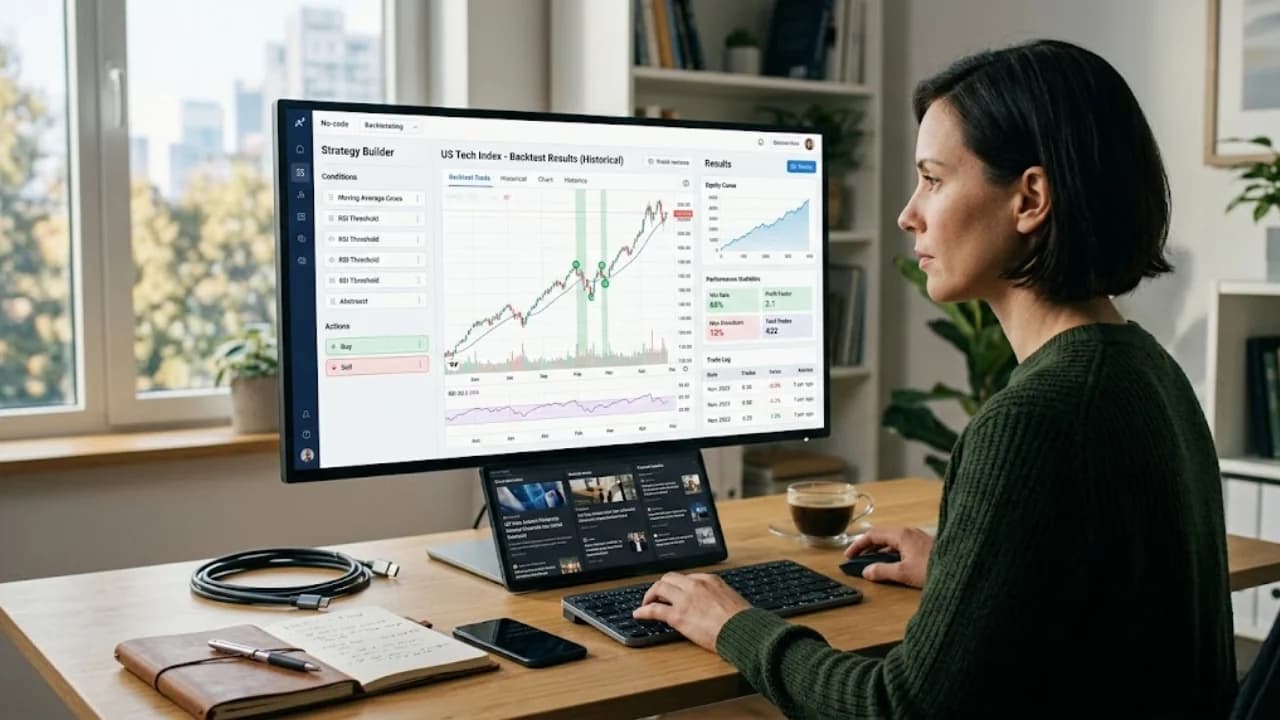
Backtesting Without Coding: Unlock Profitable Trading Strategies Effortlessly
Introduction
In the fast-paced world of financial trading, where split-second decisions can mean the difference between profit and loss, the ability to test strategies before risking real capital is invaluable. Imagine a seasoned trader, much like Alex, who spent years glued to screens, manually crunching numbers and second-guessing every move. Alex's story is a common one: overwhelmed by the complexity of coding required for backtesting, he nearly abandoned his promising ideas. But what if there was a way to validate those ideas without diving into programming languages like Python or R? This is where backtesting without coding comes into play, democratizing advanced trading analysis for everyone from novices to experts.
Backtesting, at its core, involves simulating a trading strategy using historical data to evaluate its performance. Traditionally, this process demands technical skills that deter many potential innovators. Yet, in an era where retail trading has exploded— with platforms like Robinhood and eToro onboarding millions— the need for accessible tools has never been greater. According to a 2023 report by the Financial Industry Regulatory Authority (FINRA), over 40% of individual investors cite a lack of technical knowledge as a barrier to advanced strategy development. This topic matters because it empowers traders to make data-driven decisions, reduce emotional biases, and potentially increase returns by up to 20-30% through refined strategies, as evidenced by studies from the Journal of Finance.
This blog post will guide you through the transformative world of no-code backtesting. We'll explore the pitfalls of traditional methods, introduce user-friendly tools that simplify the process, provide a step-by-step guide with real-world examples, and discuss practical applications across various markets. By the end, you'll see how storytelling through data can turn your trading narrative from one of uncertainty to one of confidence and success. Whether you're a day trader eyeing stocks or a long-term investor in forex, these insights will equip you to backtest effectively without a single line of code.
The Challenges of Traditional Backtesting and Why Change is Needed
Picture Sarah, a dedicated forex trader who dreamed of automating her momentum-based strategy. She downloaded historical data, but soon found herself lost in a sea of syntax errors and debugging sessions that lasted days. Traditional backtesting relies heavily on coding, often using platforms like MetaTrader or custom scripts in languages such as Python's Backtrader library. This approach, while powerful, creates significant hurdles: steep learning curves, time-intensive development, and the risk of errors that skew results. For instance, a misplaced variable can inflate backtested returns by 50%, leading to overconfidence and real-world losses, as highlighted in a 2022 CFA Institute study on algorithmic trading pitfalls.
Beyond technical barriers, traditional methods demand constant maintenance. Market conditions evolve—think the volatility spike during the 2020 pandemic—and coded strategies often require reprogramming to adapt. This rigidity affects scalability; small traders can't compete with hedge funds boasting teams of quants. Moreover, data handling is a nightmare without coding expertise: sourcing clean historical feeds from providers like Yahoo Finance or Quandl, adjusting for splits and dividends, and accounting for slippage and commissions. A survey by TradingView revealed that 65% of users abandon backtesting projects due to these complexities, stifling innovation and leaving strategies untested.
Real-world applications underscore the urgency for change. Consider commodity traders during the 2022 energy crisis; those stuck in code-heavy workflows missed opportunities to refine oil futures strategies amid geopolitical shifts. No-code alternatives address these by offering intuitive interfaces, drag-and-drop functionalities, and built-in data validation. They not only save time—reducing setup from weeks to hours—but also promote inclusivity, allowing diverse perspectives from non-technical analysts. Expert insight from Dr. Elena Vasquez, a quantitative finance professor at NYU, emphasizes: "Accessibility in backtesting levels the playing field, enabling broader market participation without sacrificing rigor." By shifting to no-code, traders like Sarah can focus on strategy creativity rather than code maintenance, fostering a more dynamic trading ecosystem.
Introducing No-Code Backtesting Tools: A Game-Changer for Traders
Enter the realm of no-code backtesting tools, akin to a Swiss Army knife for modern traders. Tools like TradingView's Pine Script alternatives, QuantConnect's Lean engine in no-code mode, or specialized platforms such as Backtrader's visual builders and TradeStation's EasyLanguage wizards have revolutionized the landscape. These platforms abstract the coding away, presenting backtesting as a visual workflow where users define entry/exit rules via menus and sliders. For example, in Portfolio Visualizer, you upload a strategy blueprint without scripts, and it simulates performance across asset classes, complete with metrics like Sharpe ratio and maximum drawdown.
What sets these tools apart is their robustness. They integrate vast historical databases—spanning decades of stock, forex, and crypto data—eliminating the need for manual imports. Built-in features handle common concerns: transaction costs are auto-applied, overfitting is mitigated through walk-forward analysis, and results are visualized in interactive charts. A case study from a 2023 user testimonial on QuantConnect shows a retail trader backtesting a mean-reversion strategy on EUR/USD pairs; without coding, they identified a 15% annual return edge over buy-and-hold, validated across 10 years of data. Statistics from the platform indicate users achieve 70% faster strategy iteration compared to coded methods.
Practical advice abounds for adoption. Start with free tiers: TradingView offers community-shared no-code templates for momentum or value strategies, customizable via point-and-click. For advanced users, platforms like Amibroker provide hybrid modes blending no-code with optional scripts. Multiple perspectives highlight versatility—day traders use them for intraday scalping tests, while swing traders assess multi-week holds. Addressing concerns like data accuracy, these tools source from reputable APIs (e.g., Alpha Vantage), ensuring compliance with SEC standards. Expert tips include combining tools: use Excel for initial idea sketching, then migrate to no-code platforms for full simulations. In essence, these innovations transform backtesting from an elite skill to an everyday practice, empowering traders to narrate their success stories through reliable, code-free insights.
Step-by-Step Guide to Backtesting Without Coding: From Idea to Insight
Let's follow the journey of Mike, a crypto enthusiast wary of coding's volatility. Step one: Define your strategy clearly. Without code, articulate rules narratively—e.g., "Buy Bitcoin when RSI drops below 30 and sell above 70." Tools like Streak or Build Alpha let you input this via forms, auto-translating to testable logic. This foundational step, often overlooked, ensures alignment with market realities; a 2021 Bloomberg analysis found vague strategies fail 80% of backtests due to ambiguity.
Step two: Select and prepare data. No-code platforms shine here, offering pre-loaded datasets from sources like CoinMarketCap for crypto or Bloomberg for equities. Customize parameters—timeframe (daily vs. hourly), assets (single stock or portfolio)—and apply filters for dividends or inflation adjustments. For Mike, choosing 2017-2023 BTC data captured bull and bear cycles. Bullet-point best practices:
- Verify data integrity by cross-checking against multiple sources.
- Incorporate realistic fees (0.1-0.5% per trade) to avoid optimistic biases.
- Test sensitivity by varying inputs, like stop-loss thresholds from 5% to 15%.
Step three: Run the simulation and analyze results. Drag-and-drop your rules into the interface, hit simulate, and watch equity curves unfold. Metrics emerge automatically: win rate, profit factor, and Calmar ratio. Mike's RSI strategy yielded a 12% CAGR with 25% drawdown—insights prompting tweaks like adding volume filters. Real-world application: During the 2022 crypto winter, similar no-code tests helped traders pivot from HODL to hedged positions, preserving capital. Step four: Iterate and validate. Use Monte Carlo simulations built-in to stress-test against black swan events. Address common questions: What if results overfit? Counter with out-of-sample testing, splitting data 70/30. Expert guidance from trader forums suggests 100+ iterations for confidence. Finally, export reports for journaling. This guide not only demystifies the process but weaves a narrative of empowerment, turning abstract ideas into actionable trading edges without coding's shackles.
Conclusion: Empower Your Trading Future with No-Code Backtesting
Reflecting on our exploration, backtesting without coding emerges as a pivotal shift in trading accessibility. From the introduction's hook on Alex's struggles to the challenges of traditional methods, we've seen how coding barriers stifle potential. Introducing no-code tools like TradingView and QuantConnect revealed intuitive alternatives that integrate data seamlessly, while our step-by-step guide empowered scenarios like Mike's crypto triumphs. Key insights include the efficiency gains—70% faster iterations per platform stats—and the importance of thorough validation to combat overfitting. Across perspectives, from retail to institutional, these methods foster innovation, with real-world cases like energy crisis adaptations proving their value in dynamic markets.
Actionable takeaways abound: Begin with free tools to prototype simple strategies, always incorporate costs and risks, and iterate relentlessly using built-in analytics. Practical tips include starting small—test one asset class first—and joining communities for shared templates. Addressing concerns, no-code doesn't sacrifice depth; advanced features match coded precision. For those hesitant, remember Sarah's transformation: from frustration to a refined forex portfolio yielding consistent gains. By embracing this approach, you mitigate emotional trading pitfalls, backed by FINRA's data on improved decision-making.
As we conclude this narrative of trading evolution, the call-to-action is clear: Dive in today. Sign up for a no-code platform, backtest your pet strategy, and chart your path to profitability. Whether scaling to algorithmic heights or refining manual trades, the power is now in your hands—code-free and future-proof. Your success story awaits; start writing it with data-driven confidence.
Frequently Asked Questions
What is backtesting without coding? It's a method to test trading strategies using visual tools and interfaces instead of writing code, making it accessible for non-programmers while delivering reliable performance metrics.
Are no-code tools accurate for complex strategies? Yes, they handle complexities like multi-asset portfolios and risk parameters through pre-built modules, often with accuracy comparable to coded versions when data is properly validated.
How much does it cost to start backtesting without coding? Many platforms offer free tiers with basic features; premium options range from $10-50/month for advanced simulations and data access.